I Had 4 Hours to Save My Pitch. Pi Gave Me 3 Hours and 47 Minutes Back.
The call came at 10:14 Am on a Tuesday.
My investor meeting was at 2:30 PM. The deck I had spent the previous two weeks building had just been flagged by my co-founder as 'not ready'. The market data was outdated. The competitive slide was missing three competitors who had launched since I last looked.
I had four hours. I had no designer. I had a very strong inclination that I was going to fail.
What I Did Instead of Panicking
I opened Pi. Not because I had a plan. Because I had no other options and someone in my startup Slack had mentioned it the week before. I typed what I needed: 'Seed round pitch deck for a B2B SaaS HR platform targeting SMEs in Southeast Asia. We have 180 paying customers, 23% MoM growth, and we're raising $800K. The design should feel like a company that's already grown up.'
I pressed send at 10:21 AM.
At 10:23 AM, I had an outline. At 10:31 AM, I had a fully designed 14-slide deck. At 10:32 AM, I started editing.
The deck Pi generated wasn't perfect. It never is — the AI doesn't know my specific story the way I do. But the structure was right. The design was clean. The market data it pulled was current and cited. The competitive landscape it assembled was more complete than what I had built over two weeks of manual research.
I spent the next 13 minutes making the deck mine — changing specific numbers, adjusting the narrative on slide 5, swapping out one image. By 10:47 AM, I was done.
What Happened at 2:30 PM
The meeting went well. Not because the deck was perfect. It went well because I walked in confident.
One of the investors asked who designed it. I told her the truth.
The Thing Nobody Tells You About Pitch Decks
Everyone obsesses over the content of a pitch deck. The narrative. The numbers. The story arc. And those things matter — enormously.
But there's a hidden tax that founders pay every time they build a deck, and nobody talks about it: the production tax. The hours spent not on what you're saying, but on how it looks. The reformatting. The template hunting.
Pi doesn't just speed up the production. It eliminates the production tax almost entirely. Which means the time you get back isn't just quantity — it's quality. You think more clearly about your story when you're not simultaneously wrestling with slide layouts.
I got 3 hours and 47 minutes back that Tuesday. I used them to prepare for questions I knew were coming. That's what changed the outcome.
What I Use Pi For Now
Pi has become a permanent part of how we work — not just for fundraising, but for everything.
Board updates. Team all-hands. Client proposals. Investor monthly updates. Every piece of content that used to take us an afternoon now takes us less than an hour. The design quality is consistent. The research is cited. The presentation never looks like it was made at midnight by someone who gave up.
My co-founder still doesn't fully believe me when I explain how fast it is. So I showed him. I typed a brief while he timed me on his phone.
Four minutes and eleven seconds. Start to finished draft.
He registered that afternoon.
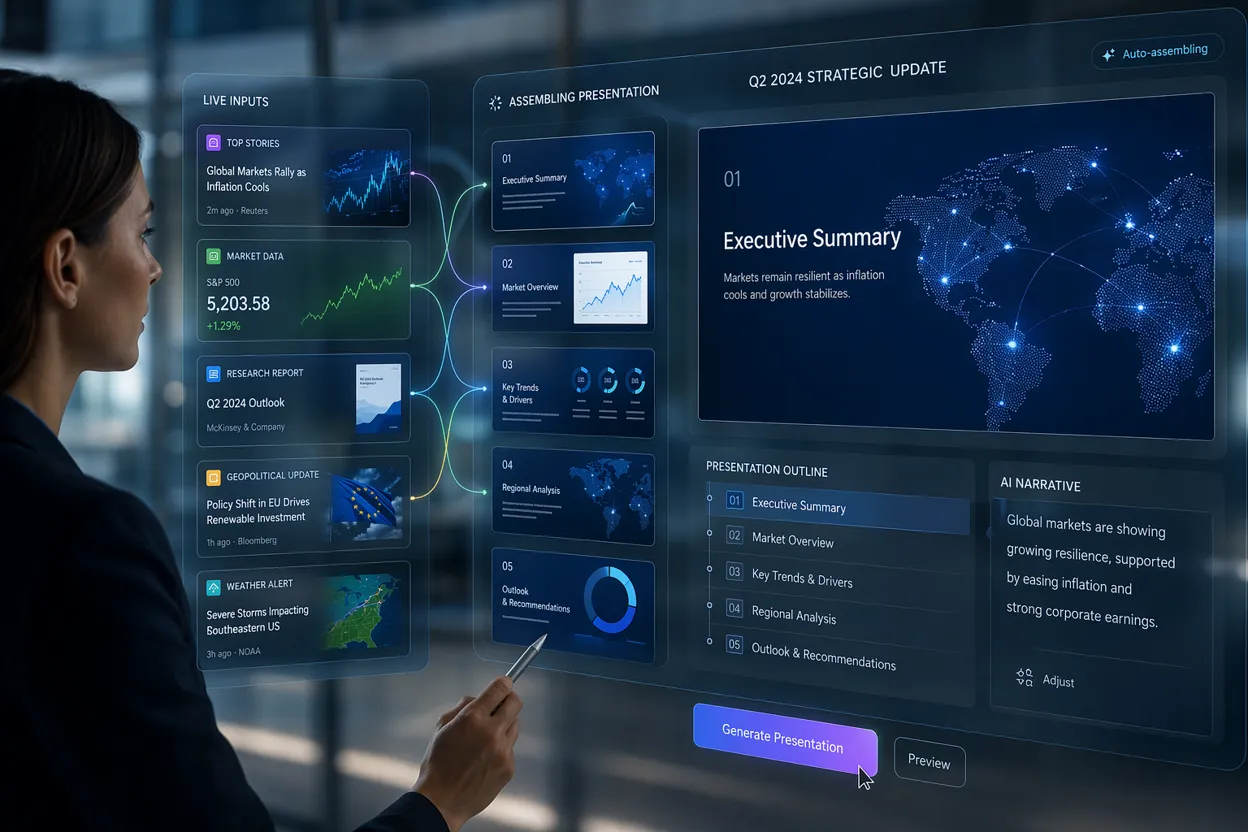 We Added Real-Time Research to Pi. Here's What That Actually Means for You.