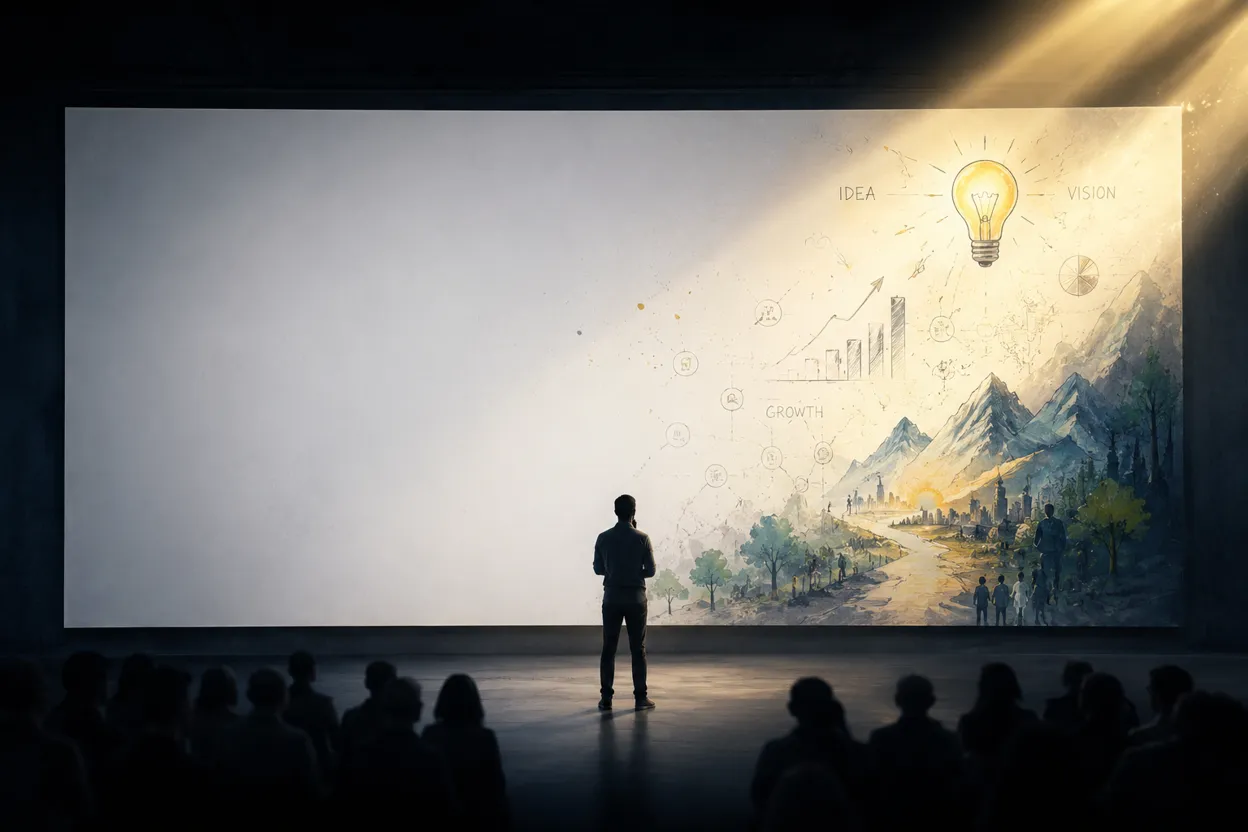
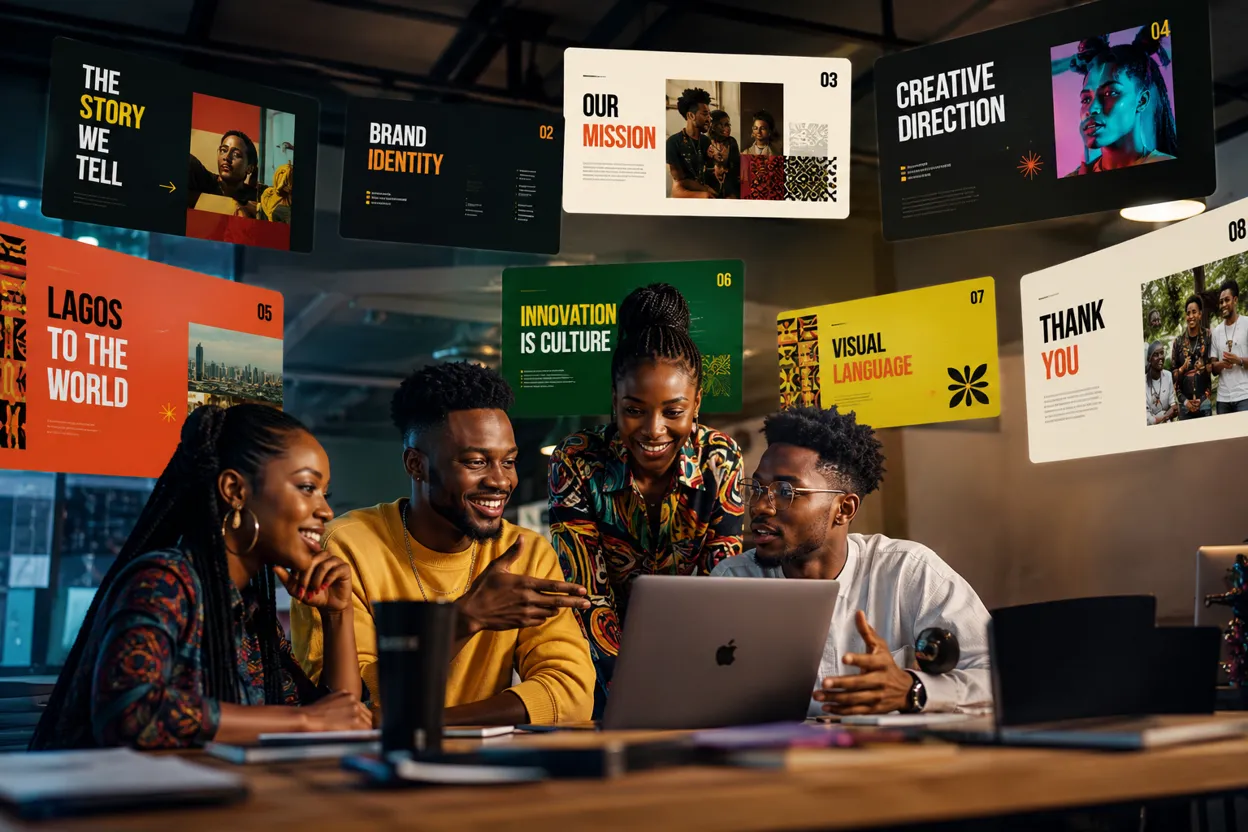
Static Slides Are a Dead Format. Nobody Told the Industry Yet.
Let me make an argument that will seem obvious in five years and controversial right now: the static presentation slide is a dead format. It is surviving on institutional inertia and the absence of a convenient alternative. An alternative that now exists.
Every Other Medium Evolved. Presentations Didn't.
Think about how media has changed in the last thirty years. Television went from broadcast to on-demand to interactive. Music went from album to streaming to spatial audio. Advertising went from print to video to personalised dynamic content. Social media went from text to photo to video to short-form video to immersive video.
Every medium evolved to become more dynamic, more kinetic, more immersive.
And then you walk into a conference room and someone clicks through a flat deck of static slides, and you are transported to 1993.
The presentation format has not evolved meaningfully in thirty years. Every other medium around it has.
This is not because static slides are the right format. It is because the cost of producing dynamic content — motion, sound, video — has been prohibitive for the kind of everyday professional presentations that make up the bulk of slide deck usage.
The Attention Economy Has Changed What Audiences Expect
The people sitting in your presentation in 2026 have spent the last decade watching TikTok, YouTube, Instagram Reels, Netflix, and the entire apparatus of the attention economy. Their expectations for visual content have been calibrated by some of the most sophisticated media production in human history.
And then you ask them to focus for forty minutes on slides where the only motion is the cursor moving to the next click.
This is not a small gap. Research on attention and media consumption consistently shows that motion captures and holds attention more effectively than static images. The human visual system is literally wired to prioritise moving objects — it is an evolutionary feature, not a preference.
Static slides work against the biology of your audience. You are asking them to do something cognitively harder — sustain attention on static content — while their visual processing is trained on dynamic content. The better your content is, the more it deserves a format that works with the audience's attention rather than against it.
What Comes Next
The integration of tools like Seedance 2.0 into presentation platforms like Pi represents the beginning of what will seem, in retrospect, like an obvious evolution.
Presentations will increasingly contain embedded video elements — not as an occasional flourish but as a standard component. Slides will have motion where motion helps comprehension. Sound where sound carries meaning. Kinetic data visualisation where static charts obscure patterns.
The tools to produce something better are here now. The question is how quickly the industry's habits catch up to the technology's capabilities.
Based on history, it will take longer than it should. But it will happen.