Tome Alternative: Moving Beyond Basic Storytelling with Multi-Agent AI
Great presentations are not only about beautiful slides. They are about how ideas move, how arguments build, and how decisions get made.
That is one reason storytelling-first tools like Tome became popular. They make it easier to turn rough ideas into visual stories without building a traditional slide deck from scratch. For early concepts, lightweight narratives, and quick idea sharing, that workflow can feel refreshing.
But when a presentation needs to support a real business outcome, storytelling alone may not be enough.
A business deck may need to persuade investors, win a client, align leadership, support a strategy, or turn research into a clear recommendation. If you are looking for a Tome alternative, the real question may be whether your next deck needs to move beyond basic storytelling.
That is where Pi, short for Presentation Intelligence, offers a different approach. Pi uses multi-agent AI to help teams build presentations with deeper research, stronger structure, and business-grade aesthetics.
Where Tome Works Well
Tome works well when the goal is quick narrative communication. It can help users shape ideas, notes, or concepts into a visual story that is easy to share.
This makes it useful for early concept exploration, simple explainers, educational content, lightweight team updates, and narrative-style drafts. If the main goal is to communicate an idea quickly, a storytelling-first tool can be enough.
Tome’s strength is that it reduces the blank-page problem. Users can focus on the story they want to tell instead of starting with a traditional slide structure.
However, not every presentation is just a story. When a deck needs to guide a business decision, it needs sharper logic, stronger evidence, audience-specific messaging, and a visual style that feels credible.
Why Teams Look for a Tome Alternative
The gap appears when teams move from idea sharing to business communication.
A pitch deck needs to prove market opportunity. A sales deck needs to connect customer pain to business value. A consulting report needs to turn analysis into a recommendation. An executive presentation needs to make priorities clear enough for action.
In these cases, a presentation needs more than narrative flow. It needs research, structure, and decision logic.
A story gives a presentation movement. Strategy gives it force.
This is why some teams begin looking for a Tome alternative. They do not simply need a tool that turns ideas into a story. They need a tool that helps turn information into a persuasive business deck.
How Pi Uses Multi-Agent AI for Business Presentations
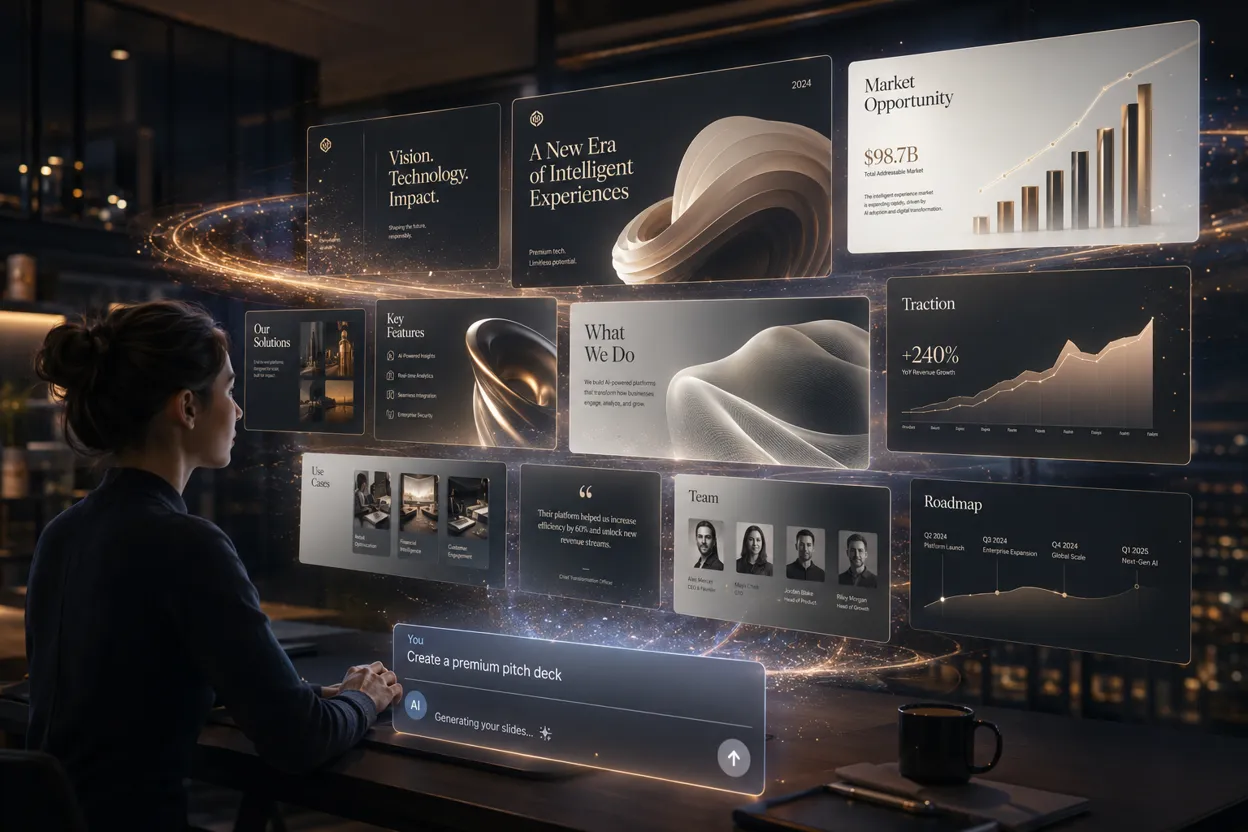
Pi is designed for teams that need a more advanced presentation workflow. Instead of treating a deck as a simple storytelling output, Pi helps users build presentations through a multi-agent AI process.
That means different parts of the presentation workflow can be supported more deeply, including research, structure, copywriting, and visual direction.

1. Research Before Narrative
A strong business presentation should begin with understanding.
Before a deck can persuade, it needs the right information. That may include market context, customer pain points, competitive positioning, product value, financial logic, or internal strategy.
Pi helps teams move beyond surface-level content by supporting deeper research and information organization. For example, a product strategy deck should not only describe the product. It should explain the market need, clarify the audience, show why the timing matters, and connect the recommendation to business impact.
2. Structure Before Slides
Many tools can create slides quickly. But a fast slide deck is not always a strong slide deck.
Professional teams need a logical flow that helps the audience move from problem to insight, from insight to recommendation, and from recommendation to action.
Pi helps users shape that structure before the deck becomes a set of finished slides. This gives teams more control over the argument, especially for investor pitches, sales proposals, consulting recommendations, and leadership updates.
Instead of simply generating a narrative, Pi helps shape a business case.
3. Business Aesthetics Before Decoration
Design is not just decoration in a business presentation. It affects trust.
A deck for a premium brand, a C-level meeting, or an enterprise sales pitch needs to feel polished and intentional. If the design feels generic, the message can feel less credible, even when the content is strong.
Pi is built for business-grade aesthetics. The goal is not just to create slides that look nice. The goal is to create a deck that feels appropriate for the audience, the brand, and the business stakes.
Tome vs. Pi: Which Presentation Workflow Fits You?
| What You Need | Tome Works Well For | Pi Works Well For |
|---|---|---|
| Turning ideas into a presentation | Quickly shaping rough ideas into a visual story | Turning ideas into a structured business deck |
| Creating the content flow | Building a simple narrative flow | Building a research-backed, decision-focused structure |
| Designing the final deck | Creating clean, story-style visuals | Creating polished, business-ready slides |
| Working with complex business topics | Explaining a concept clearly | Organizing strategy, data, recommendations, and business cases |
| Supporting teams | Sharing ideas with a team | Creating client-ready decks for professional and global teams |
Which Workflow Should You Choose?
Choose Tome if your priority is fast storytelling, lightweight narrative content, or turning rough ideas into a visual explanation.
Choose Pi if your presentation needs to support a business outcome. That may mean winning a client, raising funding, aligning leadership, turning research into a recommendation, or preparing a deck for a global team.
The difference is not simply about which tool makes slides faster. It is about what the presentation needs to accomplish.
If the goal is to tell a simple story, Tome may be enough. If the goal is to build a persuasive business deck with stronger logic, better structure, premium aesthetics, and multi-agent AI support, Pi is the stronger fit.
FAQs About Tome Alternatives
Q: What is the best Tome alternative for business presentations?A:The best Tome alternative depends on your use case. If you need quick storytelling, Tome may work well. If you need professional business presentations with deeper structure, multi-agent AI, and business-grade aesthetics, Pi is a strong alternative.
Q: Is Tome good for pitch decks?A:Tome can be useful for early narrative drafts or concept sharing. For serious pitch decks, teams often need more control over research, structure, financial logic, visual polish, and audience-specific messaging.
Q: What is the difference between storytelling tools and business presentation AI?A:Storytelling tools help users turn ideas into narrative-style content. Business presentation AI supports a broader workflow, including research, structure, copywriting, design direction, collaboration, and localization.
Q: Why does multi-agent AI matter for presentations?A:Multi-agent AI matters because strong presentations require different types of work. Research, structure, writing, and design are not the same task. A multi-agent workflow can support these steps more deeply than a single prompt-based generation process.
Conclusion
Tome is useful for quick storytelling and early idea sharing. But professional teams often need more than a story. They need presentations that support decisions, persuade stakeholders, explain strategy, and represent the brand with confidence.
Pi is built for that next layer of AI presentation creation. With multi-agent AI, stronger structure, deeper research, and business-ready aesthetics, Pi helps teams move from basic storytelling to professional business communication.
If your next deck needs to do more than explain an idea, try Pi for free and build a business presentation that moves beyond basic storytelling.