Why Canva Falls Short for Professional Pitch Decks (And What to Use Instead)
Canva is one of the easiest tools for creating visual content. It is fast, familiar, and full of templates for social posts, flyers, reports, infographics, and simple presentations.
For many everyday design tasks, that is exactly why people love it.
But a pitch deck is not just another visual file.
When investors open your deck, they are not only asking whether it looks good. They are asking whether the market is real, whether the problem matters, whether your product is differentiated, whether your traction is credible, and whether your team can turn the opportunity into a business.
That is why some founders, sales teams, and business leaders eventually start looking for a Canva alternative for PPT or pitch deck creation.
The issue is not that Canva is bad. It is that professional pitch decks need more than design convenience. They need business logic, investor-ready structure, data clarity, and a visual style that supports trust.
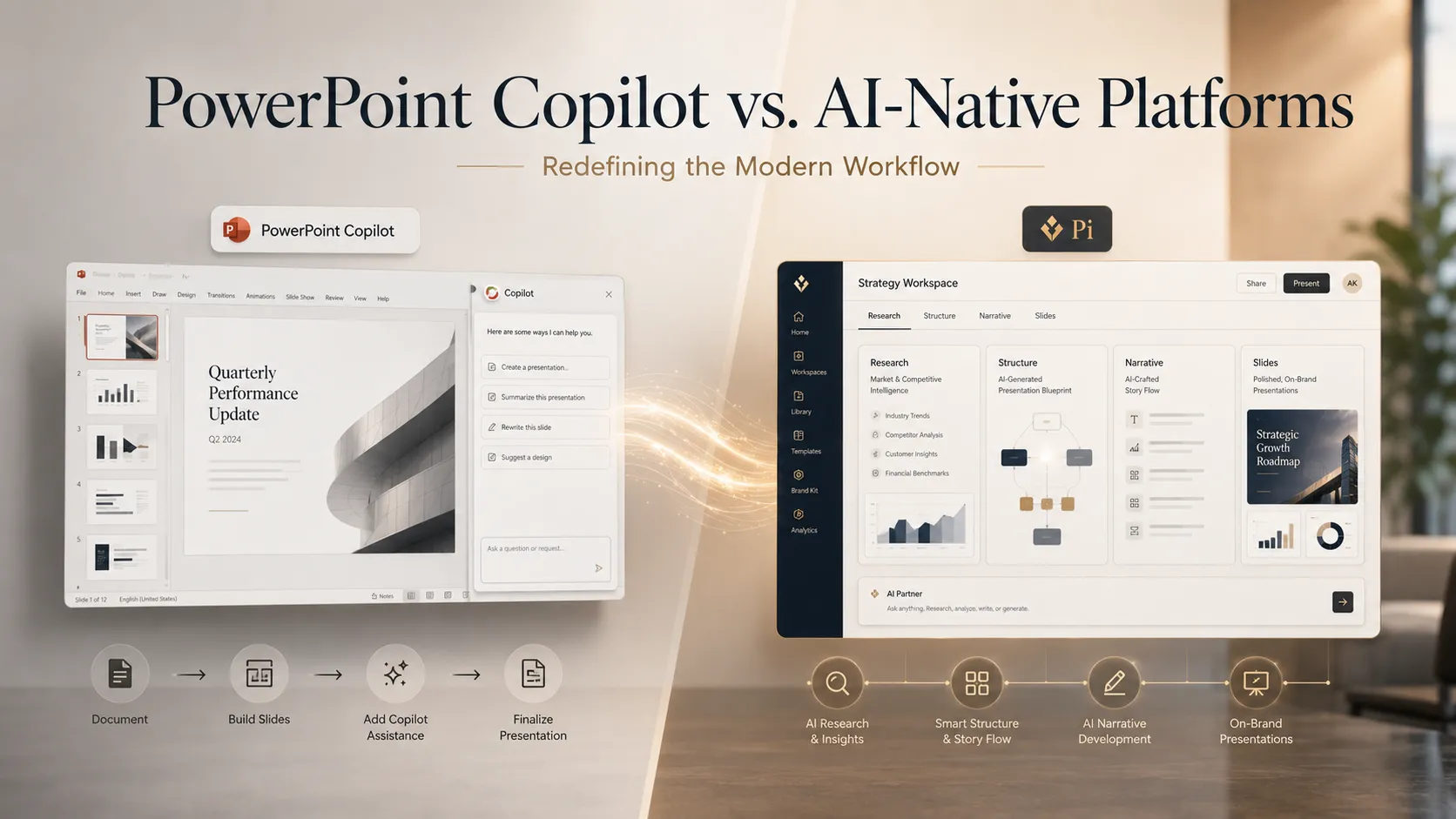
Pi, short for Presentation Intelligence, is built for that deeper workflow. Instead of helping teams simply decorate slides, Pi uses multi-agent AI to help turn research, strategy, copy, and design into professional business presentations.
Canva Is Built for Visual Speed, Not Investor Logic
Canva works well when the goal is visual speed.
Its template library makes it easy for non-designers to create polished-looking assets without starting from scratch. A marketing team can make social graphics. A founder can create a quick one-pager. A student can build a simple presentation. A small business can design a flyer or event deck in minutes.
That accessibility is Canva’s strength.
It gives users a fast way to make content look designed, even if they do not have design training. For lightweight slides, early drafts, internal updates, and simple visual communication, Canva can be a useful starting point.
But pitch decks are different from ordinary presentation slides.
A professional pitch deck is not judged only by layout, color, or typography. It is judged by whether the story makes business sense. A beautiful slide cannot rescue a weak market argument. A stylish template cannot explain unclear traction. A polished visual cannot replace a strong fundraising narrative.
That is where Canva’s strength as a general design tool can become a limitation.
Why Professional Pitch Decks Need More Than Good Design
A pitch deck has one job: help investors understand why your business deserves attention.
That means the deck needs to answer a set of hard questions quickly:
- What problem are you solving?
- Why does this market matter now?
- What makes your solution different?
- Who are your customers?
- What traction proves demand?
- How will the business grow?
- Why is this team the right team?
- What are you asking for?
These are not just design questions. They are strategy questions.
A professional pitch deck needs a clear narrative arc. It needs to move from problem to opportunity, from product to proof, from traction to growth, and from vision to ask. Each slide has to earn its place in that flow.
This is why an investor-ready deck usually needs more than a good-looking template. It needs structure, evidence, and business judgment.
The best AI presentation maker for pitch decks should not only help users make slides look better. It should help them make the pitch itself stronger.
Where Canva Can Fall Short for Pitch Deck Creation
Canva can be helpful for early pitch drafts. If you already know your story, your numbers, your slide order, and your investor message, Canva can help you make the deck look presentable.
The challenge begins when the deck needs to do more than look presentable.
1. Templates Can Make Your Pitch Look Generic
Canva templates are designed to be accessible and reusable. That is useful for speed, but it can create a problem for high-stakes fundraising.
Investors see many decks. If your pitch looks too much like a common template, it can feel less distinctive, even if the business idea is strong.
A professional pitch deck should feel specific to your company. The visual style should support your category, your brand, your audience, and your stage of growth. A SaaS seed deck should not feel like a lifestyle brand presentation. A deep-tech investor deck should not feel like a social media carousel.
Templates can make slides clean. They do not always make the company memorable.
2. Design Tools Do Not Build the Investment Story
A pitch deck is a business argument, not a design exercise.
Canva can help users place text, charts, icons, and images into slides. But it does not deeply decide what the investor story should be.
For example, it will not automatically know whether your market slide should lead with urgency, category growth, regulatory change, customer pain, or competitive timing. It will not decide whether your traction slide should highlight revenue, retention, usage growth, pipeline, or enterprise logos. It will not build the fundraising logic behind your ask.
Those choices matter.
A pitch deck that looks polished but lacks a strong investment story can still fail to create confidence.
3. Data Slides Need Structure, Not Decoration
Professional pitch decks often include market sizing, growth metrics, pricing models, traction, customer segments, revenue projections, and go-to-market plans.
These slides need more than nice charts. They need hierarchy.
Investors need to understand what the number means, why it matters, and how it supports the business case. If the data is placed into a template without a clear message, the slide can look finished while still feeling confusing.
A strong pitch deck does not simply show data. It explains why the data changes the way investors should see the opportunity.
That is where teams often need more than a general-purpose design platform.
What to Look for in a Canva Pitch Deck Alternative
A strong Canva pitch deck alternative should not simply offer more templates.
It should help teams build a better pitch.
That means it should support the full presentation workflow: research, structure, writing, visual direction, and final slide polish. For founders and business teams, the most valuable tool is not always the one with the largest design library. It is the one that helps turn scattered information into a persuasive investor narrative.
When comparing Canva alternatives for PPT or pitch decks, look for a tool that can help with:
- Business logic, not just slide layout
- Investor-ready deck structure
- Data-driven storytelling
- Clear visual hierarchy
- Professional slide design
- Pitch-specific messaging
- Multi-language support for global teams
The goal is not simply to make a deck look better. The goal is to make the deck easier to believe.
How Pi Helps Teams Build Investor-Ready Pitch Decks
Pi is designed for professional presentation workflows, especially when the deck needs to support a serious business outcome.
For pitch decks, that means Pi helps teams think beyond templates. It supports the work that happens before the slide looks finished: research, structure, copy, and visual direction.
1. Multi-Agent AI for Research and Business Logic
Pi uses multi-agent AI to support different parts of the presentation process.
For a pitch deck, that can include organizing market context, shaping competitive positioning, clarifying customer pain, and turning business information into a clear narrative. Instead of relying on one prompt to generate a generic deck, Pi helps support the separate jobs that make a pitch stronger.
A strong pitch deck needs research. It needs logic. It needs proof. It needs a reason for investors to keep reading.
Pi is built to help with that deeper layer.

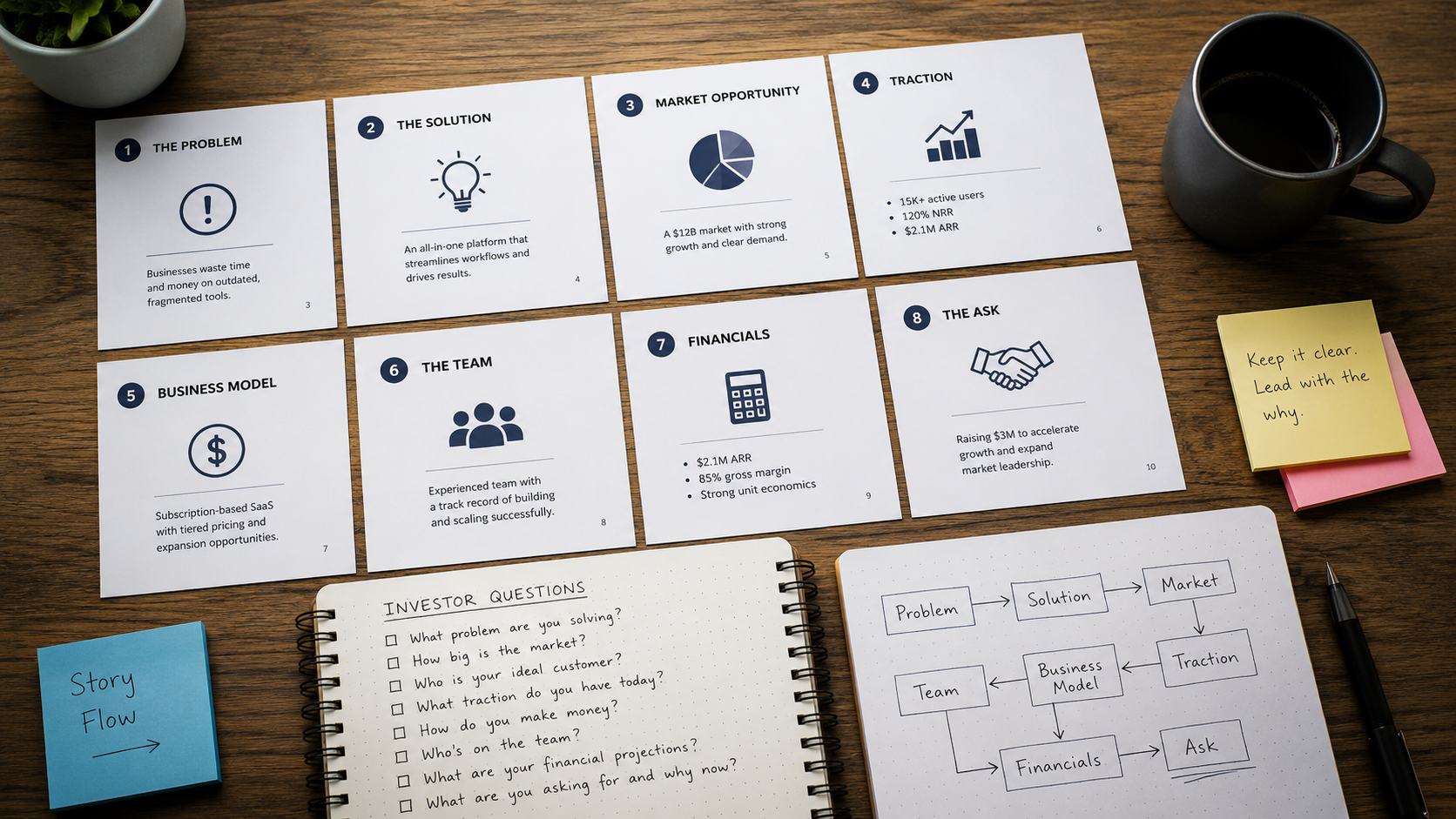
2. A Pitch Deck Flow Built Around Investor Questions
Investors usually read pitch decks through a mental checklist.
They want to understand the problem, solution, market, product, traction, business model, go-to-market strategy, team, financials, and ask. If the deck does not answer these questions clearly, even strong visuals may not be enough.
Pi helps teams shape a presentation flow around those questions.
The goal is not to force every startup into the same structure. The goal is to make sure the deck has a logical path from insight to opportunity, from opportunity to proof, and from proof to action.
That kind of structure is especially important for data-driven pitch decks, B2B sales decks, investor presentations, and executive fundraising materials.
3. Professional Slide Design for High-Stakes Meetings
Design still matters. It just should not be the only thing doing the work.
A pitch deck needs to look credible, clear, and polished. The visual style should help the investor focus on the business, not distract from it. Slides need enough polish to feel professional, but enough restraint to keep the argument in control.
Pi helps teams create pitch decks with business-grade aesthetics. That means stronger hierarchy, cleaner structure, and a more professional visual tone than a generic design template.
For high-stakes fundraising, the deck should not feel like a template someone filled in. It should feel like a serious business story built for the room.

Canva vs. Pi: From Visual Templates to Pitch Deck Intelligence
| Pitch Deck Task | Canva Helps With | Pi Helps With |
|---|---|---|
| First visual draft | Turning ideas into designed slides | Turning business ideas into an investor-ready story |
| Market context | Adding charts and visual assets | Structuring market insight and opportunity |
| Investor narrative | Designing individual slides | Building a persuasive deck flow |
| Data and traction | Placing numbers into templates | Creating hierarchy around metrics that matter |
| Final presentation | Making slides look polished | Creating a professional, pitch-ready business deck |
The difference is not simply design quality. It is whether the tool helps the pitch become clearer, sharper, and more credible.
The Verdict: A Pitch Deck Is More Than a Design File
Canva is excellent for creating visual content. It is accessible, flexible, and useful for many everyday design tasks.
But a professional pitch deck is not just a design file. It is a business argument.
If you already have the strategy, structure, investor narrative, and data story, Canva can help you make slides look clean. But if you need help turning research, traction, market insight, and positioning into a persuasive fundraising story, Pi is built for that deeper workflow.
With multi-agent AI, business-grade structure, and professional slide design, Pi helps teams create pitch decks that are not only polished, but also investor-ready.
If your next deck needs to win investor attention, try Pi for free and build a professional pitch deck with multi-agent AI.
Frequently Asked Questions (FAQ)
Q: What is the best Canva alternative for pitch decks? A: The best Canva alternative for pitch decks depends on your needs. Canva can work well for visual drafts and simple presentations. If you need stronger business logic, investor-ready structure, and professional pitch deck design, Pi is a strong option.
Q: Is Canva good for pitch decks? A: Canva can be useful for early pitch deck drafts, simple slides, and visual formatting. For professional pitch decks, teams often need more support with market context, investor narrative, traction slides, financial logic, and data-driven storytelling.
Q: What should a professional pitch deck include? A: A professional pitch deck usually includes the problem, solution, market opportunity, product, traction, business model, go-to-market strategy, team, financials, and fundraising ask. The exact structure depends on the company and audience.
Q: Why use an AI presentation maker instead of Canva for pitch decks? A: A specialized AI presentation maker can help with more than visual design. Pi uses multi-agent AI to support research, structure, copywriting, and slide design, helping teams create investor-ready pitch decks with stronger business logic.
 Scaling Globally: Top Multi-Language AI Slide Generators for Cross-Border Teams