Need More Than MagicSlides? Building Data-Driven Pitches with Deep AI Research
MagicSlides solves a clear problem: turning text into slides quickly. If you already have notes, a lesson outline, a short report, or a rough topic, a fast text-to-slide workflow can save time and produce a usable deck.
But teams often start looking for a MagicSlides alternative when the question changes. The need is no longer, “Can AI create slides from my text?” It becomes, “Can AI help me build a credible business argument?”
That shift matters. A data-driven AI pitch deck, sales proposal, consulting report, or executive presentation needs more than formatted content. It needs research depth, business logic, audience awareness, and visuals that feel ready for professional review. Pi, short for Presentation Intelligence, is built for that deeper layer of presentation work.
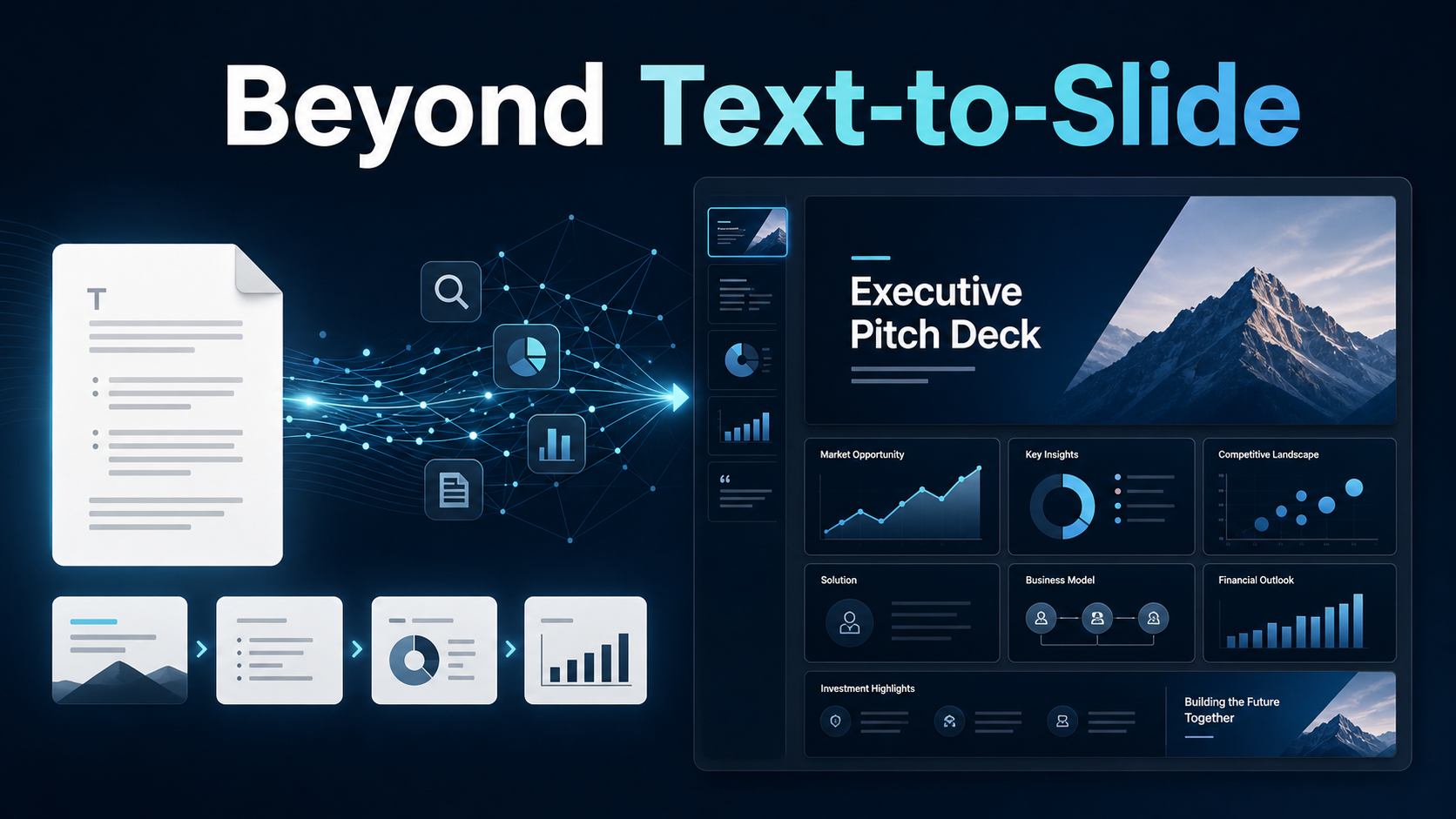
When Quick Text-to-Slide Tools Are Enough
MagicSlides fits lightweight creation workflows. It helps users move from a document, prompt, or block of text into a basic slide format without starting from a blank canvas. For students, educators, solo professionals, and teams preparing simple internal updates, this kind of text to presentation AI can be useful.
If the goal is to summarize existing material, convert notes into slides, or prepare a quick internal draft, speed may matter more than strategy. In those cases, quick conversion may be enough.
The issue is not whether MagicSlides has value. It does. The better question is whether quick conversion is enough for the presentation you need to deliver.
Where Basic Slide Conversion Starts to Feel Limited
The limitations appear when the audience is more demanding. Investors, enterprise buyers, executives, and strategic partners rarely judge a deck only by whether the slides look clean. They evaluate whether the argument is credible, the evidence is relevant, and the recommendation is commercially sound.
A basic AI slide maker can organize what you already wrote, but it may not challenge the logic behind it. That becomes a problem when the deck needs to support a decision.
Common boundaries include:
- The deck summarizes information but does not build a persuasive argument.
- Market, customer, or competitive claims feel thin.
- The flow lacks a decision-oriented structure.
- Slides look acceptable but not polished enough for a high-stakes meeting.
- The user still needs to rebuild the narrative manually.
These are signs that the use case has moved into a more strategic category. At that point, the core need is not only slide production. It is presentation intelligence.
Data-Driven Pitch Decks Need More Than Formatted Text
A serious pitch deck is not just a collection of slides. It is a business argument designed to move an audience from uncertainty to confidence.
For a founder, that may mean explaining why a market is ready, why the problem is urgent, why the solution is differentiated, and why the team can execute. For a sales team, it may mean connecting customer pain points to measurable outcomes. For a consultant, it may mean turning research into recommendations leadership can act on.
A data-driven AI pitch deck should help answer practical questions: What is the market opportunity? Who is the target customer? What evidence supports the problem? How does the solution create value? What alternatives exist? What should the audience do next?
Design comes after that foundation. Attractive slides can improve clarity and credibility, but they cannot compensate for weak reasoning. In professional settings, research and logic come before styling. This is why teams often look beyond a basic text to presentation AI tool toward a more advanced AI slide maker.
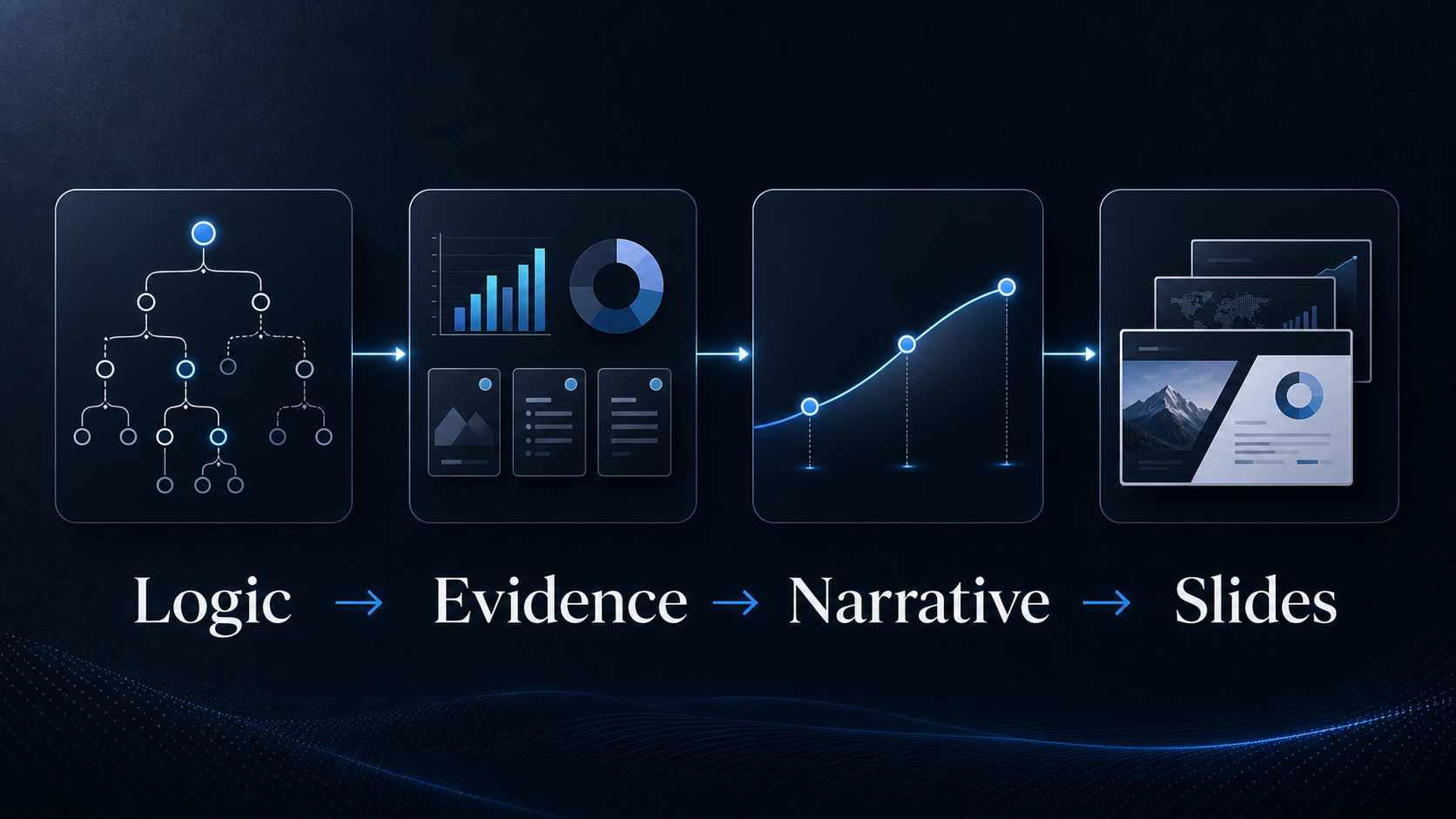
How Pi Supports Deeper Business Presentation Workflows
Pi is designed for teams that need to move from information to structured persuasion. Rather than focusing only on generating slides quickly, Pi supports the broader workflow of building business-ready presentations with stronger reasoning, clearer organization, and premium visual quality.
Not every presentation needs this level of depth. Many everyday decks do not. But when the outcome matters, the deck must guide judgment, not simply display content.
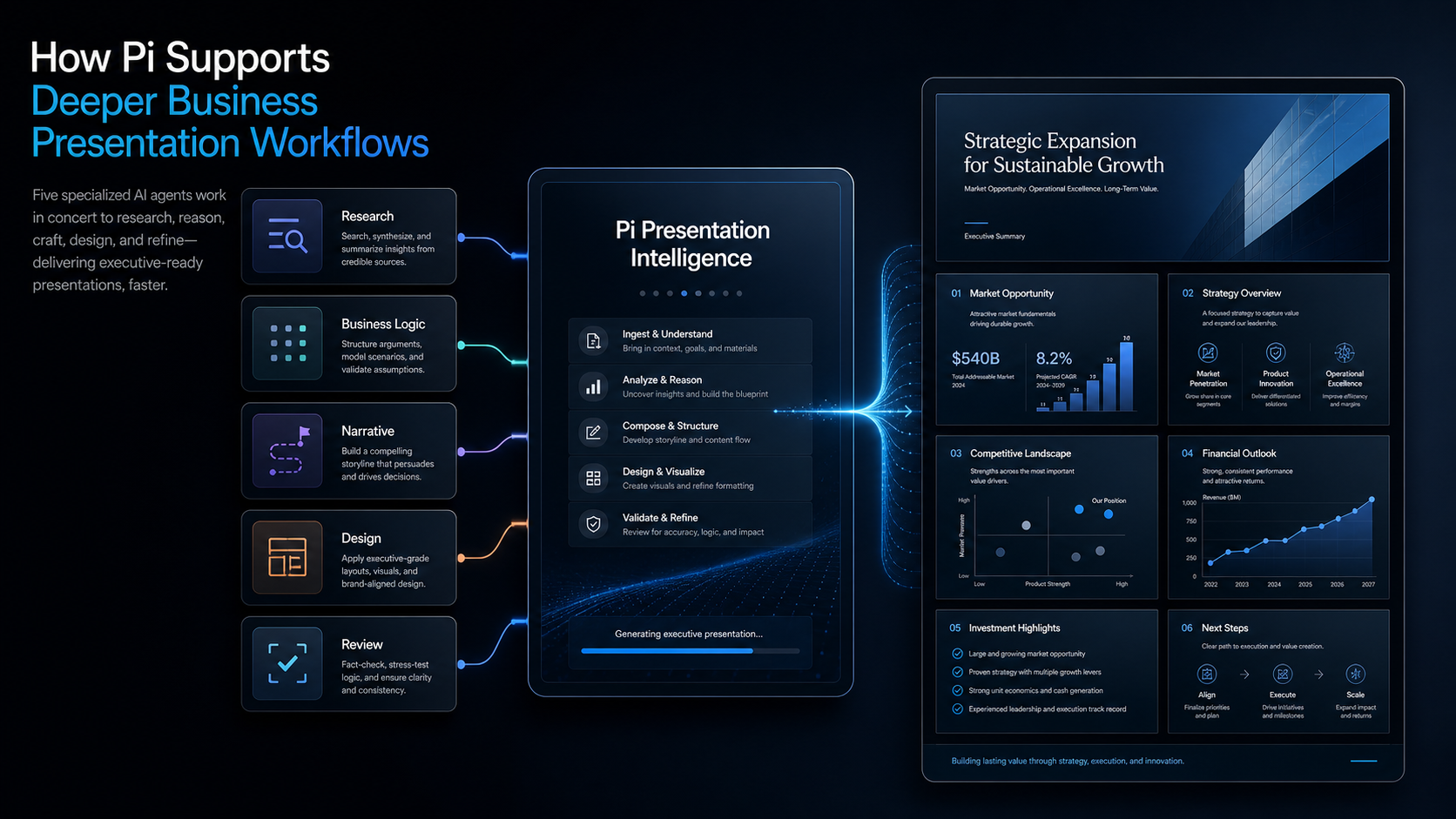
1. Multi-Agent AI Helps Build the Argument
Pi’s Multi-Agent AI approach supports different parts of the presentation process, from research framing to narrative organization and slide development. Instead of treating a prompt as a simple input for a fixed deck, Pi helps break down the business problem and shape a more complete argument.
For example, a pitch deck may need to connect market trends, customer needs, competitive positioning, product value, business model, and growth strategy. These pieces must work together. If they appear as disconnected sections, the deck may feel shallow even when each slide looks polished.
Pi helps professional users think through those connections. It does not replace human judgment or guarantee every claim is correct. Teams still need to verify facts, refine assumptions, and apply expertise. The value is that Pi helps structure the thinking process so the deck starts from a stronger strategic foundation.
2. Business Logic Comes Before Slide Styling
Many AI presentation tools begin with layout. Pi begins with the logic of the presentation: what the audience needs to understand, what evidence supports the message, and what sequence will make the argument easier to follow.
This matters for pitch decks, sales decks, consulting reports, market research decks, and executive presentations. These formats usually require a clear progression: problem, insight, opportunity, solution, proof, recommendation, and next step. If that progression is weak, even beautiful slides can feel unfocused.
Pi helps turn complex inputs into a business-ready structure. A market analysis can become an executive narrative. A product strategy can become an investor story. A sales proposal can become a decision-focused deck. The emphasis is not simply on producing more slides, but on making every slide serve a clear purpose.
3. Premium Aesthetics Support Credibility
Professional design is not decoration. In a high-stakes presentation, visual quality affects how the audience perceives the clarity, seriousness, and credibility of the message.
A deck for an investor meeting, board discussion, enterprise sales conversation, or brand proposal needs to feel intentional. Typography, spacing, hierarchy, color, chart treatment, and page rhythm all influence whether the deck feels credible.
Pi focuses on business-grade aesthetics that support the argument rather than distract from it. The goal is visual polish that feels premium, controlled, and appropriate for professional decision-making environments.
MagicSlides vs Pi: A Formal Comparison
| Capability | MagicSlides | Pi |
| Text-to-slide speed | Fast conversion from text to slides | Generation within a deeper workflow |
| Research depth | Best for user-provided content | Supports research-driven deck building |
| Pitch logic | Useful for basic outlines | Helps structure persuasive arguments |
| Business structure | Suitable for summaries | Built for pitch, sales, and executive decks |
| Visual polish | Practical for quick presentations | Premium, business-grade aesthetics |
| Best-fit use case | Classroom, drafts, explainers | High-stakes business presentations |
The Verdict: Choose Based on the Job of the Deck
If your priority is speed and simplicity, MagicSlides may be enough. It is practical when you already have content and need to turn it into slides quickly. For everyday presentations, educational content, or lightweight internal updates, a fast text to presentation AI workflow can be the right choice.
If your presentation needs to persuade investors, win clients, align executives, or support a strategic decision, the requirements change. The deck must carry a clear business argument, present evidence responsibly, and look polished enough for a professional audience. In that context, Pi is a stronger fit because it is designed around deeper presentation intelligence rather than basic conversion.
The best choice depends on the job you need the deck to do. MagicSlides helps create slides from text. Pi helps professional teams turn complex information into business-ready presentations with stronger structure, clearer logic, and more credible visual execution.
Frequently Asked Questions (FAQ)
Q: What is the best MagicSlides alternative for business pitches? A: The best choice depends on your workflow. If you need quick text-to-slide conversion, MagicSlides may be sufficient. If you need a data-driven AI pitch deck with deeper research, business logic, and premium visual quality, Pi is a strong option to consider.
Q: Is MagicSlides good for pitch decks? A: MagicSlides can help create a basic pitch deck draft, especially if you already have the content prepared. Serious pitch decks often require market framing, evidence, narrative structure, competitive positioning, and refined visuals.
Q: What makes Pi different from text to presentation AI tools? A: Pi is built around Presentation Intelligence. Instead of only converting text into slides, it supports deeper business presentation workflows with Multi-Agent AI, structured reasoning, business-ready narratives, and premium aesthetics.
Q: Can Pi help create data-driven AI pitch decks? A: Yes. Pi can help teams organize research, clarify business logic, structure the pitch narrative, and turn complex information into a polished professional deck. Users should still review data, validate claims, and apply their own business judgment before presenting.
 Creative Agency Client Proposal Template: Winning B2B Deals with Aesthetics
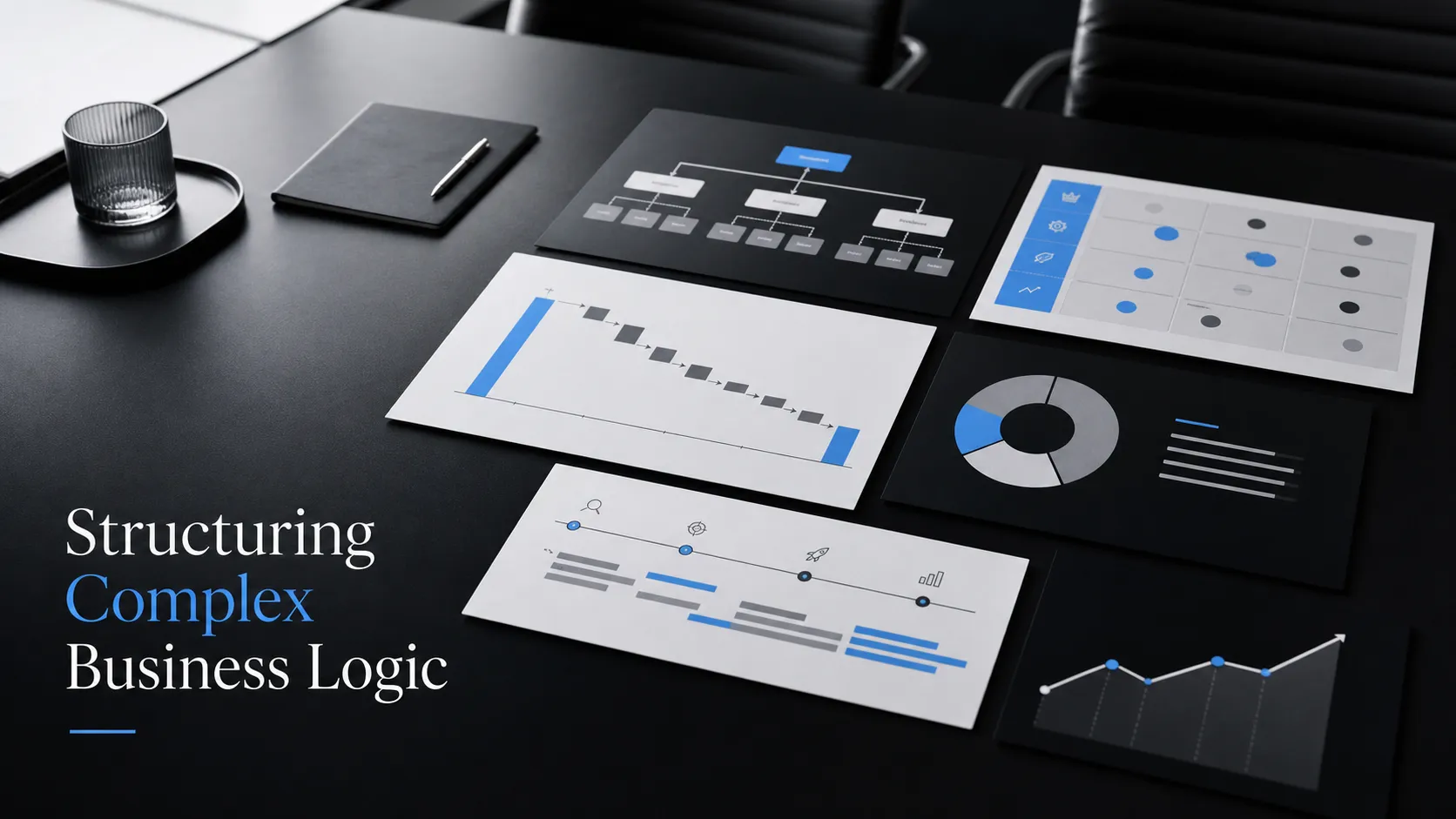 Management Consulting Report Template: Structuring Complex Business Logic