Mastering the Minimalist Pitch Deck: Less Clutter, More Impact
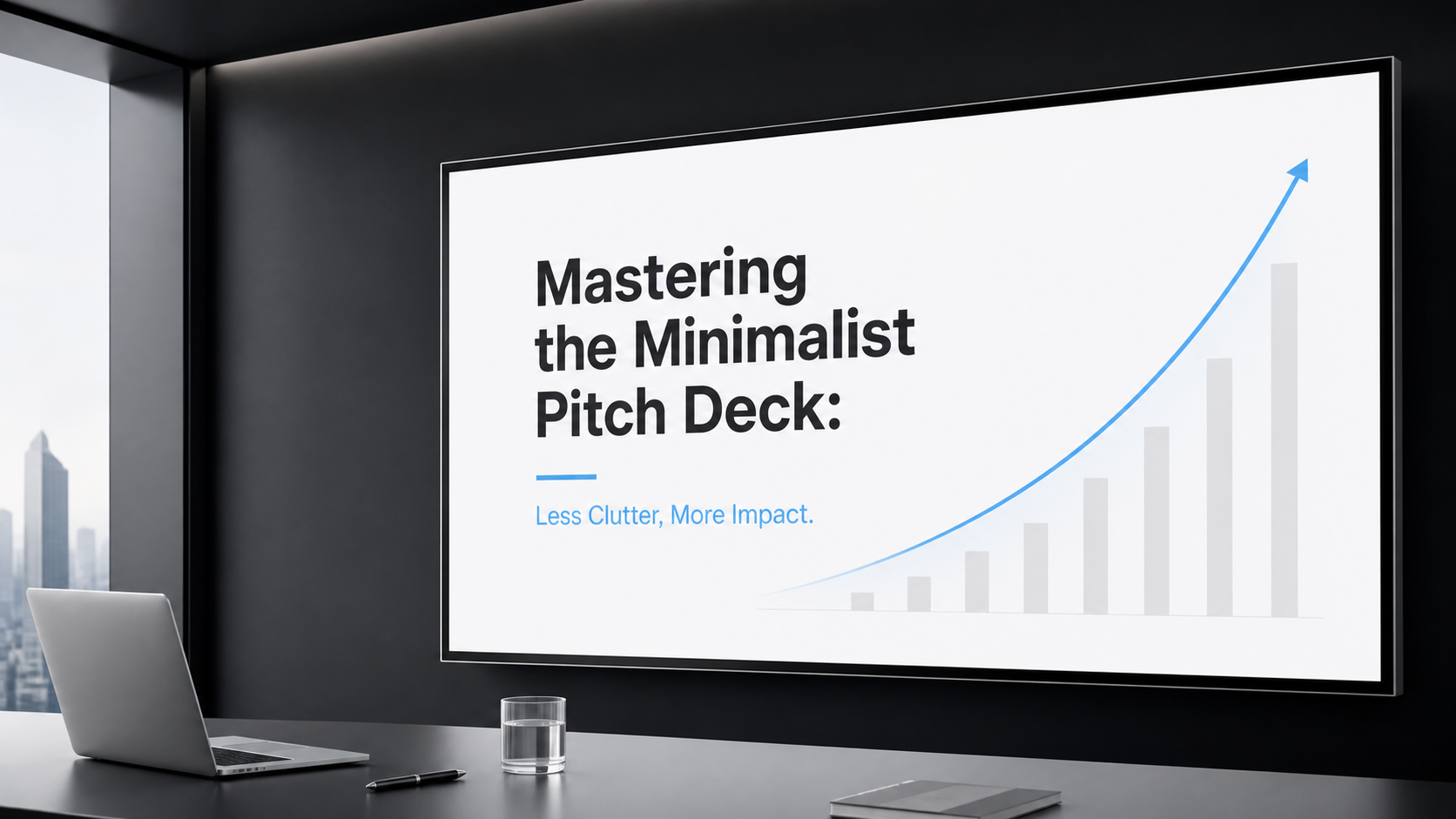
A minimalist pitch deck is not a deck with less ambition. It is a deck with less friction.
Founders often try to include everything: market data, product screenshots, traction charts, customer quotes, pricing logic, roadmap details, and competitive context. The intention is understandable: prove the business is serious. The risk is that the deck becomes dense, noisy, and hard to judge.
In fundraising, clutter is not only a design problem. It is a communication problem. Investors need to understand the opportunity, assess the logic, and remember the strongest evidence quickly. Clean presentation design helps by reducing cognitive load and making the most important judgment points easier to see.
Why Clutter Weakens a Pitch Deck
A cluttered pitch deck usually comes from over-explaining. Founders want to show they have done the work, so they add more words, numbers, and visual elements. But investors rarely read a pitch deck like a report. They scan for signals: problem, timing, market, solution, traction, model, and team.
When every slide says too much, nothing feels decisive. The main argument competes with supporting details. Data becomes decoration instead of evidence. The company may look complex, but not necessarily compelling.
Common clutter problems include:
- Too many ideas competing on one slide
- Charts without a clear takeaway
- Long paragraphs that repeat the spoken explanation
- Decorative elements that weaken visual hierarchy
- Inconsistent layouts that make the deck feel undisciplined
Minimalism solves these problems only when it is strategic. Removing content without clarifying the message can make a deck feel thin. The goal is not empty slides. The goal is easier judgment.
What a Minimalist Pitch Deck Really Means
A minimalist pitch deck uses restraint to improve communication. It does not mean every slide must be black and white, ultra-sparse, or visually cold. It means every slide has a clear job, every design choice supports that job, and every element earns its place.
Strong minimalist decks usually follow one core idea per slide. A problem slide should make the pain unmistakable. A solution slide should show what changes. A traction slide should make progress visible. A market slide should show scale without forcing investors to decode a spreadsheet.
White space is one of the most useful tools in minimalist pitch deck design. It gives the viewer room to process the message and makes key elements feel intentional. Grayscale tones can create a mature, business-grade foundation, while a limited accent color can guide attention to the most important number, phrase, or action.
Simple slide layouts also matter. A strong layout creates reading order. It tells the investor where to look first, what to compare, and what to remember. That is where minimalist design becomes more than an aesthetic. It becomes part of the argument.
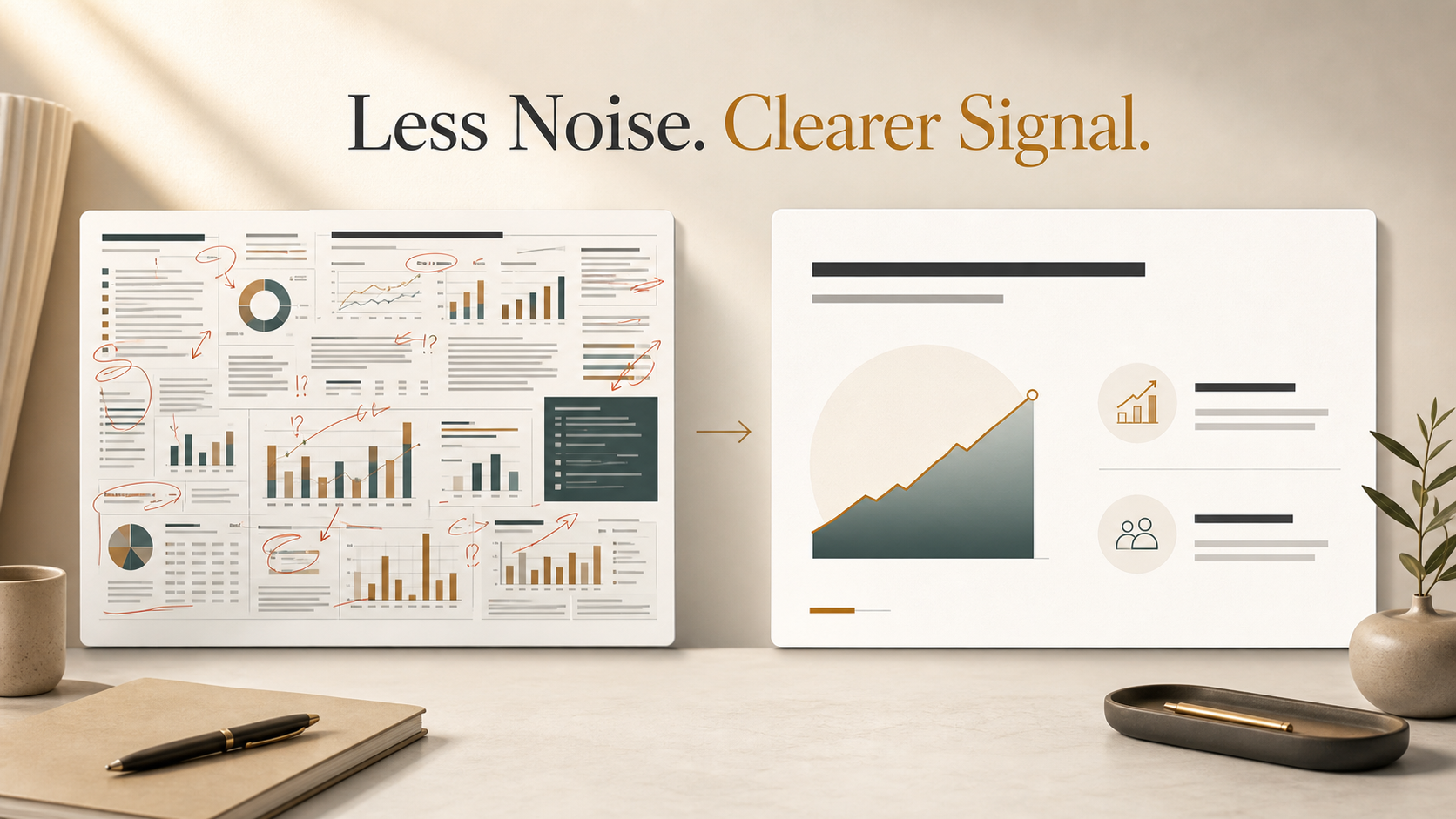
Simple Slide Layouts That Make Investors Pay Attention
The best simple slide layouts are built around investor decisions. They help the audience move from question to answer.
On a problem slide, a clean layout might pair one sharp headline with two or three proof points. On a solution slide, it might show the product promise, workflow change, and one visual example. On a market slide, it may use a single sizing structure instead of several competing charts. On a traction slide, it may emphasize the one metric that best proves momentum.
This is especially important for startup presentation aesthetics. A startup deck needs to feel modern and confident, but not overdesigned. Investors are rarely persuaded by polish alone. They are persuaded when polish makes the logic sharper.
For example, a traction slide with six charts can look busy even if the company is growing. A minimalist version might show one primary growth chart, one supporting metric, and one sentence explaining why the trend matters. The slide becomes more memorable because it gives the investor a clear conclusion.
Cluttered Deck vs. Minimalist Pitch Deck
| Design Area | Cluttered Pitch Deck | Minimalist Pitch Deck |
| Text density | Long paragraphs and repeated explanations | Short, purposeful copy with clear takeaways |
| Visual hierarchy | Many elements compete for attention | One primary message leads the slide |
| Data presentation | Multiple charts without interpretation | Select metrics framed around investor decisions |
| Layout discipline | Inconsistent structure from slide to slide | Simple slide layouts with predictable reading flow |
| Trust signal | Feels busy, rushed, or unfocused | Feels controlled, credible, and business-ready |
Minimalist design has boundaries. A financial slide still needs enough detail to be credible. A traction slide still needs evidence. A market slide still needs assumptions that make sense. If you remove too much, the deck may look elegant but unsupported.
The right standard is strategic editing. Keep the information that advances investor understanding. Compress or move the rest. Clean presentation design should clarify the business case, not hide it.
How Pi Helps Teams Build Business-Ready Minimalist Decks
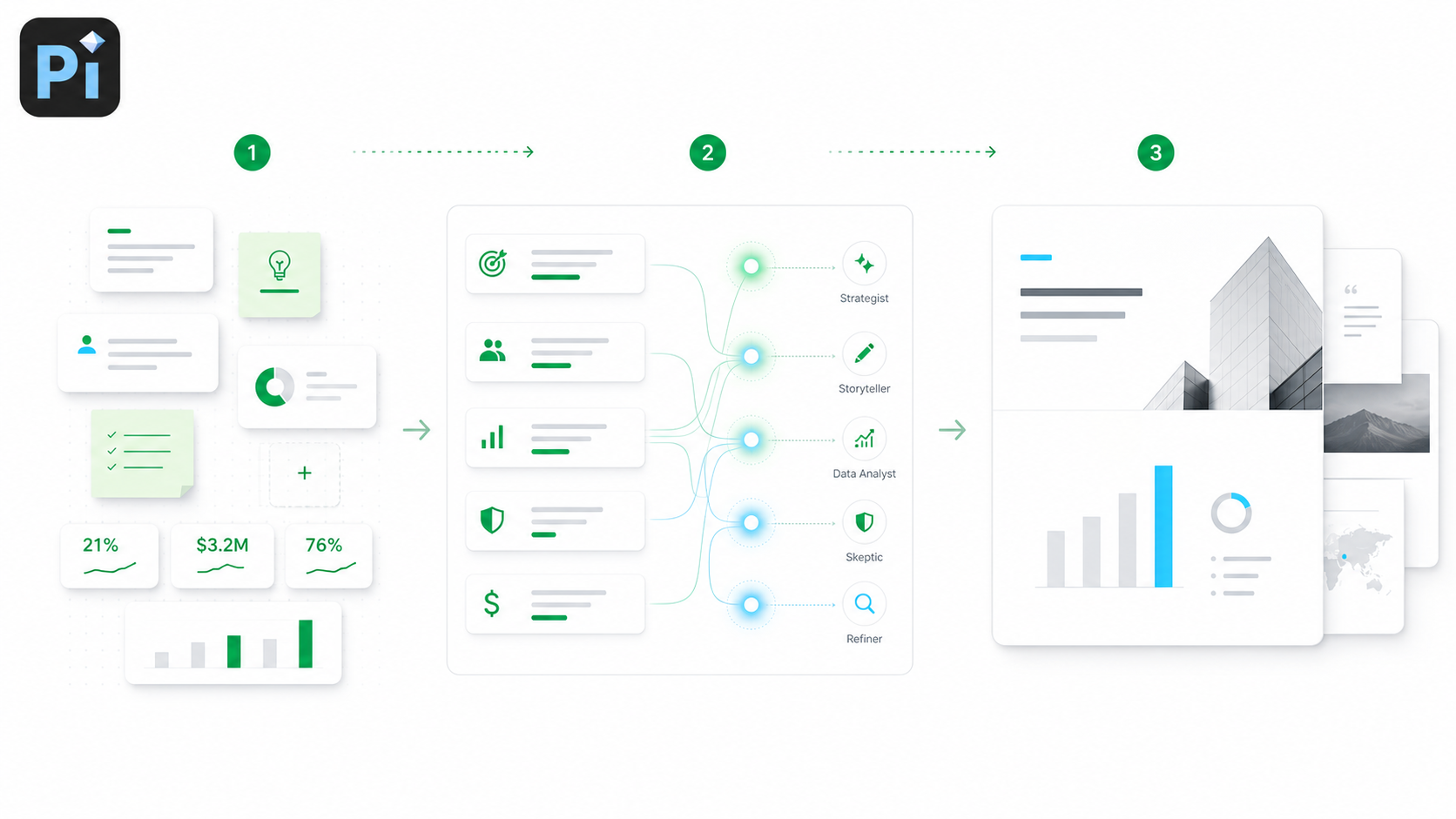
Minimalist decks are difficult because they require two types of judgment at once: business judgment and design judgment. A team has to decide what matters, how the story should unfold, and how each slide should look without becoming generic. Pi, short for Presentation Intelligence, is built for that deeper workflow.
Pi is not simply about making slides cleaner. It helps teams turn raw business material into a structured, investor-readable deck with premium visual quality. For teams preparing a pitch, minimalism becomes a strategic communication system rather than a surface style.
1. Business Logic Comes Before Minimalist Styling
A slide cannot become persuasive just because it has more white space. If the underlying message is unclear, minimalism may only make the weakness more visible. Before styling matters, the deck needs a strong sequence: why this problem matters, why now, why this solution, why this team, and why the opportunity can scale.
Pi helps teams approach the deck from business logic first. Instead of jumping directly into layout decoration, it supports the structure of the pitch so each slide has a defined role. This is useful when founders have too much raw material and need to turn it into a focused investor narrative.
2. Multi-Agent AI Helps Prioritize the Message
In a minimalist pitch deck, prioritization is everything. The hardest question is often not what to add, but what to reduce. A slide may contain five reasonable points, but only one should lead.
Pi’s Multi-Agent AI can help coordinate research, structure, copywriting, visual direction, and design polish. That makes it easier to identify which message should be emphasized, which details should be compressed, and which content belongs in speaker notes or an appendix.
This matters because startup teams often build decks collaboratively. One person wants more product detail. Another wants more market context. Another wants more brand expression. Pi helps bring those inputs into a coherent structure so the final deck feels clear rather than committee-built.
3. Premium Aesthetics Without Visual Noise
Minimalist design should still feel distinctive. A deck can be clean and still look flat, generic, or overly templated. For investor-facing presentations, the visual system should communicate maturity, confidence, and focus.
Pi helps teams create clean presentation design with business-grade aesthetics. White space, grayscale tones, simple slide layouts, and limited accent colors are used to guide attention, not create empty decoration. The result is a deck that feels polished without distracting from the company’s argument.
The Verdict: Minimalist Decks Should Feel Clear, Not Empty
A strong minimalist pitch deck does not work because it says less. It works because it helps investors understand more, faster.
The real discipline is deciding what each slide must accomplish. The problem slide should make the pain obvious. The market slide should make the opportunity legible. The traction slide should make momentum credible. The business model slide should make growth logic understandable. Every design choice should support that outcome.
Minimalism is not a universal rule for every company or fundraising stage. Some decks need more technical depth, financial detail, or market education. But the principle still applies: reduce noise, protect hierarchy, and make the business logic easier to follow.
For teams that want a cleaner, sharper, more investor-ready business presentation, Pi helps turn minimalist aesthetics into a structured workflow. The aim is not just beautiful slides. It is a deck that feels focused, credible, and ready for serious conversations.
Frequently Asked Questions (FAQ)
Q: What is a minimalist pitch deck? A: A minimalist pitch deck is a fundraising presentation that uses clear structure, focused copy, white space, simple slide layouts, and restrained visuals to make the business case easier to understand. It is not about removing evidence; it is about presenting evidence with less noise.
Q: How many words should be on a pitch deck slide? A: There is no fixed rule, but most pitch deck slides work better with one clear headline, a short supporting statement, and only essential details. If a slide needs a full paragraph to explain itself, the message may need to be simplified or split across slides.
Q: Is a black-and-white pitch deck better? A: Not always. Grayscale tones can create a premium and controlled look, but a pitch deck can still use color effectively. The key is restraint. A limited accent color can highlight important numbers, product moments, or calls to action without adding clutter.
Q: Can AI help create a clean pitch deck? A: Yes, if the AI supports both structure and design. A clean deck is not only a visual task; it also requires message prioritization and business logic. Pi uses Multi-Agent AI to help teams shape the narrative, organize content, and create premium slides that remain focused and investor-ready.
 Creative Agency Client Proposal Template: Winning B2B Deals with Aesthetics
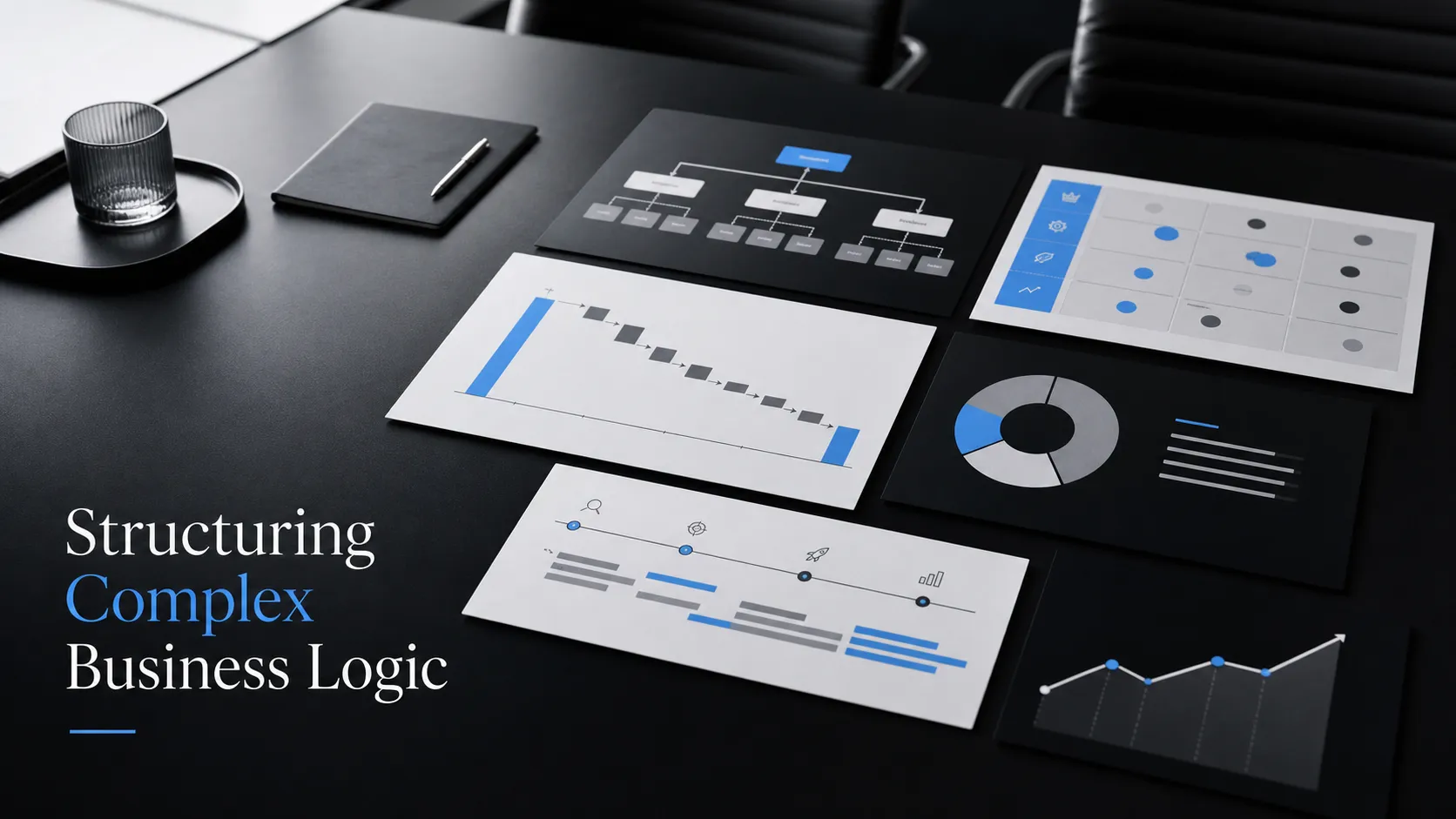 Management Consulting Report Template: Structuring Complex Business Logic