Scaling Globally: Top Multi-Language AI Slide Generators for Cross-Border Teams
Scaling Globally: Top Multi-Language AI Slide Generators for Cross-Border Teams
Global teams do not create one presentation anymore. They create a strategy deck for headquarters, a sales version for regional markets, an investor narrative for international stakeholders, and internal updates for teams working across time zones. In that environment, a multi-language AI presentation workflow can save hours. But speed is only part of the problem.
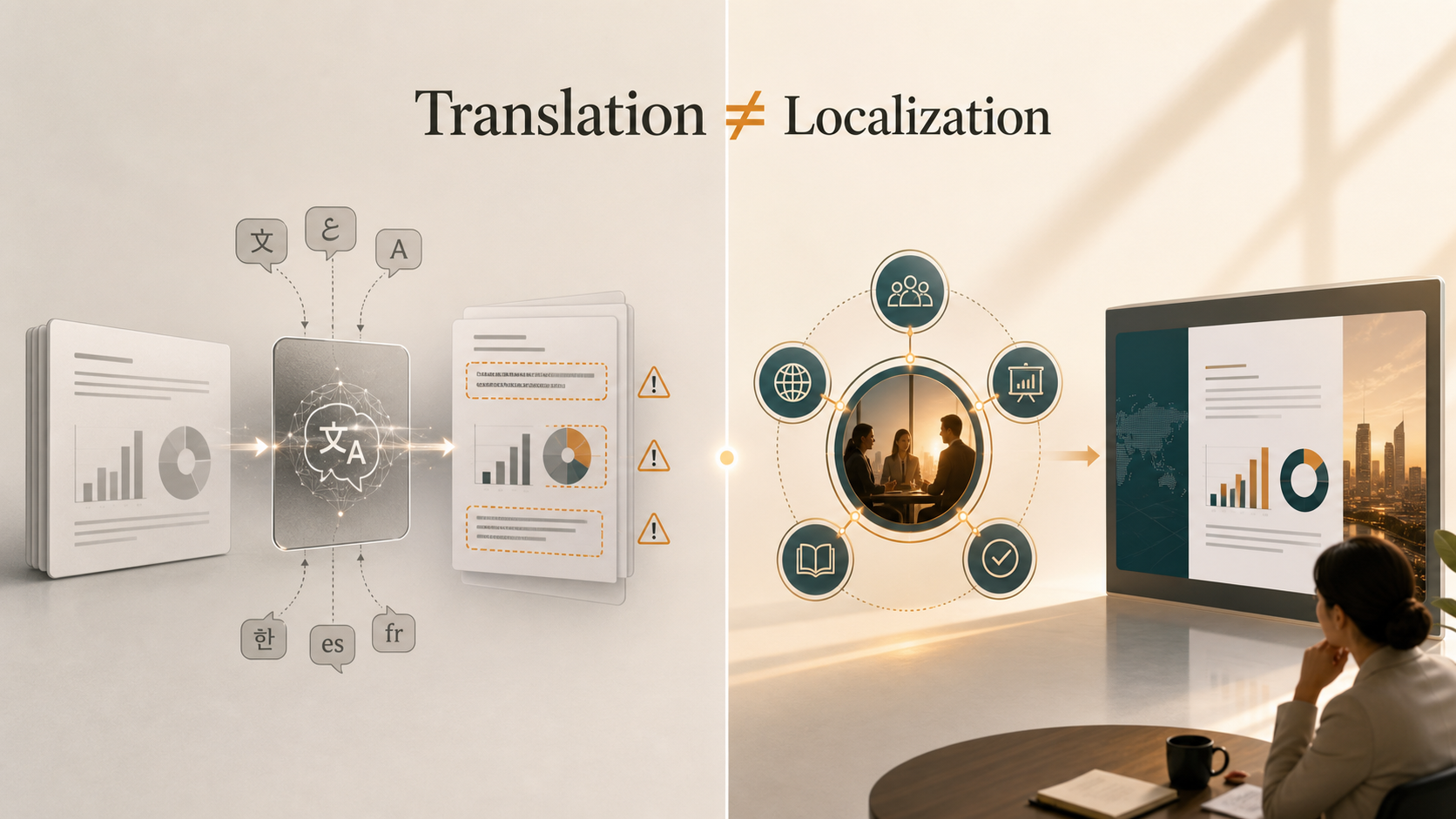
When teams search for ways to translate PPT with AI, they often discover that language conversion is easy to start and harder to trust. A deck may read correctly in another language but still feel off: the tone may be too direct, the slide layout may break, the terminology may shift, or the business argument may lose its force. For cross-border teams, the better question is not simply “Which tool translates slides?” It is “Which cross-border presentation tool helps our message stay clear, polished, and persuasive across markets?”
Why Multi-Language Presentations Are Harder Than Simple Translation
Translation changes words. Localization changes meaning, emphasis, and audience fit. A global sales deck, for example, may need different proof points in Europe than in Southeast Asia. A pitch deck may need to explain market opportunity differently for investors who know the category well versus those entering it for the first time.
That is why AI for global teams should support more than multilingual output. It should preserve structure, formatting, visual hierarchy, brand consistency, and business intent. A strong presentation in one language is usually built on a clear narrative: problem, insight, solution, traction, recommendation, or next step. If translation weakens that sequence, the deck becomes less persuasive even when the language is technically understandable.
The challenge grows when teams work with dense slides. Text expansion from English into German, Spanish, or French can overflow layouts. Short headings may become long phrases. Market-specific terms may need review. A good tool should help reduce these issues, but professional teams should still plan for human judgment before high-stakes delivery.
What to Look for in a Multi-Language AI Presentation Tool
Before comparing tools, define what “multi-language” needs to mean for your workflow. For lightweight updates, automatic translation may be enough. For executive presentations, pitch decks, consulting reports, or sales decks, the tool should support a wider set of requirements.
A useful multi-language AI presentation tool should help teams move from raw content to a business-ready deck. That includes creating a logical outline, generating slide content, adapting tone, maintaining design consistency, and exporting in formats the team can use. It should also make collaboration easier, because multilingual presentations often involve product owners, regional marketers, sales leaders, translators, and executives.
The best fit depends on the use case. Some teams need quick first drafts. Others need precise branding. Others need to combine market research, strategic messaging, and polished visuals. The more important the meeting, the more the tool must handle structure and presentation quality, not just translation.
Top Multi-Language AI Slide Generators for Global Teams
Gamma AI can be useful for fast visual drafts and web-style presentations. It works well when a team needs to turn a prompt or outline into a shareable narrative quickly, especially for internal communication or early content exploration.
Tome is often helpful for storytelling-led formats. Teams that want to shape ideas into a visual narrative may appreciate its flow, particularly when the deck is closer to a concept brief or explainer than a formal boardroom presentation.
Presentations.ai fits teams that want AI-assisted deck generation with brand-oriented controls. It may suit organizations that care about consistency and repeatable presentation systems, especially when many employees need to produce similar materials.
Beautiful.ai is strong for clean, template-guided slide design. It can help prevent messy layouts and maintain visual order, which is useful for teams that want professional-looking slides without deep manual design work.
Canva supports broad design needs and multilingual creative production. It is especially practical for marketing teams that already use Canva for social content, assets, and lightweight presentations across regions.
PowerPoint remains central for many enterprises because of its file compatibility and existing workflows. With AI features, it can help teams draft, summarize, and edit inside a familiar PPT environment.
Google Slides is a convenient option for distributed teams that prioritize real-time collaboration. It may be a good fit when multiple contributors need to comment, edit, and refine a deck together.
Pi, short for Presentation Intelligence, is built for professional business presentations where multilingual work must stay strategic, structured, and premium. It is most relevant when global teams need pitch decks, sales decks, consulting reports, executive presentations, market expansion decks, or brand proposals that must remain credible across languages.
Where Basic AI Translation Starts to Break Down
Basic AI translation is valuable, but it has limits. Those limits usually appear when the presentation carries business risk. A translated internal update may be acceptable with minor edits. A translated investor deck or regional enterprise sales proposal needs more care.
Common issues include:
- Literal phrasing that sounds correct but not natural for the audience.
- Inconsistent terminology across slides, especially for product, financial, or technical language.
- Broken layouts caused by longer translated text.
- Generic messaging that does not reflect regional market context.
- Tone mismatch, such as sounding too casual, too formal, or too aggressive.
These problems do not mean teams should avoid AI. They mean teams should treat AI as part of a workflow, not a final authority. The strongest process combines AI speed with business review, local expertise, and design refinement.
Why Pi Fits Professional Cross-Border Presentation Workflows
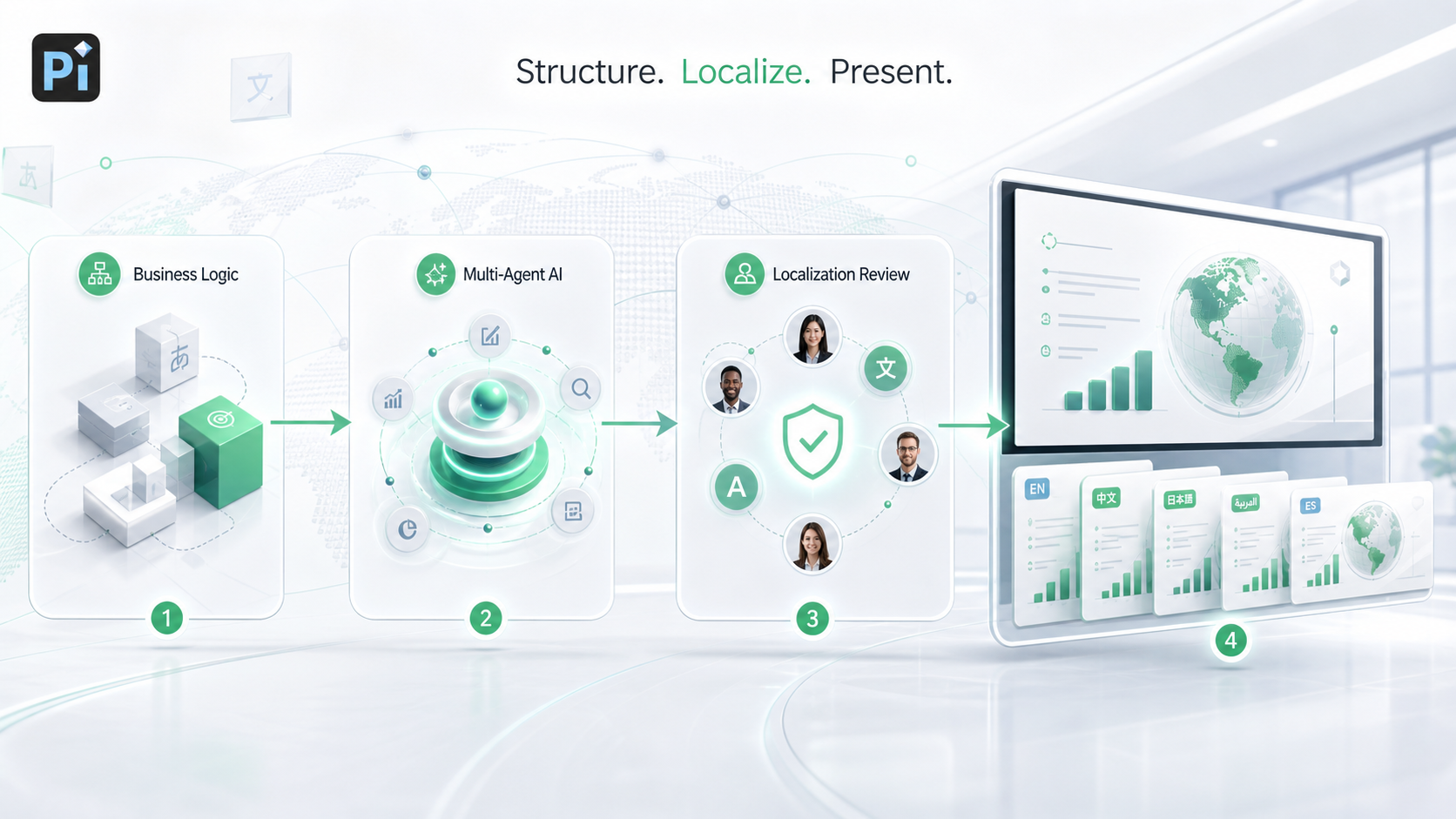
Pi is not positioned as a simple translation utility. It is an AI PPT generator for teams that need multilingual presentation creation to work alongside strategy, structure, and premium visual quality. That distinction matters for cross-border work because the deck must do more than communicate words. It must support a decision.
1. Business Logic Comes Before Slide Styling
In professional presentations, the sequence of ideas matters as much as the language. Pi helps teams shape the underlying argument before focusing on the final slide polish. For a market expansion deck, that might mean organizing the story around market size, competitive dynamics, entry strategy, financial upside, and operating risks. For a sales deck, it might mean moving from customer pain to solution fit, proof, implementation, and ROI.
This structure-first approach is useful for global teams because it gives every localized version a stronger foundation. Regional teams can adapt examples and phrasing without losing the core business narrative.
2. Multi-Agent AI Supports Deeper Presentation Development
Pi’s Multi-Agent AI approach is designed to support more advanced presentation work than a single prompt can usually provide. Instead of only producing slides from a short instruction, Pi helps build a more complete deck by considering logic, content, audience, and visual direction together. https://www.ibm.com/think/topics/ai-agents
For multilingual teams, that can help reduce the gap between a quick translated draft and a presentation that feels ready for clients, investors, or executives. The goal is not to remove human review, but to give teams a stronger starting point and a more coherent path to final delivery.
3. Premium Aesthetics Matter Across Markets
A global deck should not look like a translated document pasted into a template. It should feel intentional. Pi emphasizes business-grade aesthetics, which helps teams maintain a polished visual standard across versions.
That matters when a deck represents a company in a new market. Visual quality influences trust before the audience reads every detail. A premium layout, clear hierarchy, and controlled design system can make a multilingual presentation feel more credible and easier to follow. https://www.nngroup.com/articles/visual-hierarchy-ux-definition/
Multi-Language AI Presentation Tools Compared
| Presentation Need | General AI Slide Tools | Pi |
|---|---|---|
| Translation support | Useful for quick language conversion | Supports multilingual presentation workflows |
| Localization | Often needs regional review | Helps preserve business narrative for adaptation |
| Business structure | Varies by tool and prompt quality | Emphasizes logic, flow, and professional use cases |
| Visual consistency | Strong in template-led tools | Focuses on premium, business-grade aesthetics |
| High-stakes readiness | Good for drafts and lighter decks | Built for pitch, sales, consulting, and executive decks |
Which Tool Should Global Teams Choose?
Choose a lightweight AI slide generator if your team needs a quick multilingual draft, an internal update, or a simple translated presentation. Tools such as Gamma AI, Tome, Canva, Google Slides, PowerPoint, Beautiful.ai, and Presentations.ai can all fit specific parts of that workflow, depending on whether you prioritize speed, collaboration, templates, or existing enterprise habits.
Choose Pi when the presentation has to carry more strategic weight. If your team is preparing an investor-ready pitch, a sales-ready proposal, an executive-ready update, or a consulting-grade recommendation across multiple languages, the workflow needs more than translation. It needs business logic, localized adaptability, and design quality that survives regional edits.
For global teams, the practical answer is often layered: use AI to accelerate drafting and translation, use regional experts to validate nuance, and use a professional presentation workflow to keep the deck coherent. Pi fits that deeper layer, where multilingual support is part of a larger requirement: making the presentation clear, credible, and business-ready across markets.
Frequently Asked Questions (FAQ)
Q: What is the best AI tool for multilingual presentations? A: The best tool depends on the use case. Lightweight tools can work well for quick drafts, translated internal updates, or simple team communication. Pi is a strong fit when multilingual presentations also need business-ready structure, polished design, and professional storytelling for sales, investor, consulting, or executive settings.
Q: Can AI translate PPT files? A: Yes, AI can help translate PPT content and speed up multilingual deck production. However, teams should review terminology, formatting, tone, and regional nuance before presenting to important audiences. Translation accuracy alone does not guarantee that the deck will feel persuasive or locally relevant.
Q: Is AI translation enough for business presentations? A: Usually not for high-stakes decks. AI translation can create a useful first version, but business presentations also require clear logic, audience-aware messaging, consistent terminology, and strong visual hierarchy. Human review and strategic refinement are still important.
Q: When should global teams use Pi? A: Global teams should consider Pi when they need more than a translated slide file. Pi is designed for professional workflows where cross-border presentations must remain structured, premium, and ready for business decisions across multiple markets.
 Creative Agency Client Proposal Template: Winning B2B Deals with Aesthetics
 Management Consulting Report Template: Structuring Complex Business Logic