Premium Outdoor Brand Marketing Strategy: Presentation Template & Guide
Pitching a premium outdoor or lifestyle brand is harder than presenting a standard marketing plan. The deck must feel expansive, emotional, and inspiring, but it also has to be serious enough for executive approval, client sign-off, retail partnership discussions, or investor-facing conversations.
That tension is exactly why an outdoor brand marketing pitch needs more than beautiful imagery. The audience has to believe in the world of the brand, but they also need to understand the business case behind it. A strong marketing presentation template should help you move from aspiration to strategy: market opportunity, audience identity, positioning, campaign idea, channel plan, KPIs, and next steps.
For premium brands, the presentation is part of the brand experience. If the deck feels generic, crowded, or visually inconsistent, it can weaken the perception of the product before the proposal is fully heard.
Why Premium Outdoor Brand Presentations Are Different
Outdoor and lifestyle brands do not sell only jackets, shoes, packs, tents, watches, or accessories. They sell identity. They sell trust in extreme or meaningful environments. They sell durability, freedom, craft, performance, belonging, and the feeling of being prepared for a more intentional life.
That makes the presentation challenge more complex. A SaaS deck can often lead with efficiency, cost savings, or workflow improvement. A premium outdoor brand deck has to communicate a way of seeing the world while still proving that the marketing strategy can drive growth.
The audience is evaluating both the idea and the discipline behind it. They want to know whether the campaign can protect brand equity, reach the right community, avoid mass-market dilution, and convert attention into measurable outcomes. Atmosphere matters, but mood alone is not strategy.
The Strategic Tension: Adventure Storytelling vs. Business Approval
The central challenge is balance. Adventure storytelling https://hbr.org/2003/06/storytelling-that-moves-people can make a brand feel alive, but business stakeholders need a clear reason to approve the plan. If the presentation becomes too emotional, it may feel vague. If it becomes too analytical, it may lose the premium lifestyle energy that makes the brand desirable.
A strong premium brand strategy slide should answer both sides of the decision:
- Does the idea feel distinctive, elevated, and true to the brand?
- Is the target audience clearly defined and commercially valuable?
- Does the campaign connect positioning, channels, and activation?
- Are KPIs specific enough to evaluate success?
- Can the team execute the plan without weakening the brand experience?
This is where a strategic marketing presentation template becomes useful. The template is not just a visual layout. It is a narrative framework that keeps the deck commercially persuasive while preserving premium brand perception.
What to Include in an Outdoor Brand Marketing Strategy Presentation
A business-ready outdoor brand marketing pitch should begin with the brand challenge. This section frames the current situation: perhaps the brand is entering a new market, launching a premium product line, repositioning for a younger audience, expanding retail partnerships, or defending its high-end status in a crowded category.
The next section should define the market landscape. This does not need to be overloaded with data, but it should show awareness of category trends, consumer expectations, competitive pressure, pricing signals, and cultural shifts around outdoor participation, wellness, sustainability, and lifestyle identity.
Audience profiling should go beyond demographics. Premium outdoor consumers often buy into values and rituals: early morning trail runs, technical alpine credibility, design-conscious travel, slow adventure, family exploration, or urban-to-wilderness versatility. The deck should translate these behaviors into a clear audience insight.
Positioning then becomes the strategic center of the presentation. This is where the brand clarifies what it stands for, who it serves, what it refuses to compromise, and why it deserves premium consideration. From there, the deck can introduce message pillars, campaign concept, channel strategy, activation roadmap, KPIs, and next steps.
A complete structure often includes: brand challenge, market context, target audience, audience insight, positioning statement, message pillars, creative platform, channel strategy, launch roadmap, measurement plan, and decision request.
Premium Brand Strategy Slide Principles
Premium does not mean decorative. In a high-end outdoor presentation, restraint is often more powerful than visual noise. Slides should feel confident, edited, and intentional. A single strong image, a precise headline, and a disciplined layout can communicate more authority than a collage of mountain shots and generic adventure phrases.
Visual hierarchy https://www.nngroup.com/articles/visual-hierarchy-ux-definition/ is essential. The audience should immediately know what to read first, what the slide proves, and how it connects to the larger strategy. Headlines should be strategic, not merely descriptive. Instead of “Target Audience,” a stronger slide might state, “The Next Growth Segment Sees Performance as a Lifestyle Signal.”
Copy should be concise and textured. Premium outdoor language often works best when it is natural, specific, and grounded in product truth. Avoid clichés such as “explore more,” “go beyond,” or “adventure awaits” unless the deck gives them a distinctive strategic meaning.
Color should also be controlled. Earth tones, deep neutrals, muted greens, stone, sand, black, off-white, and technical accent colors can all work, but they need a system. Premium brands lose credibility when every slide uses a different visual mood.
Example Presentation Flow for a Premium Outdoor Brand Pitch
A strong presentation flow usually opens with a narrative statement about the market moment. This could be a shift in consumer behavior, a new definition of outdoor culture, or a tension between technical performance and lifestyle aspiration.
The second movement should build the business case. Show why the opportunity matters, who the audience is, and where the brand can win. The third movement should define the brand strategy: positioning, message pillars, and creative direction. The fourth movement should explain execution through channels, partnerships, content, retail, events, or product launch moments.
The final movement should make approval easy. Summarize the roadmap, KPIs, budget logic if relevant, ownership, and immediate next steps. The goal is not only to impress the room. It is to help the room decide.
How Pi Helps Build a Business-Ready Brand Proposal
Pi, short for Presentation Intelligence, is an AI presentation maker designed for professional business presentations. For an outdoor or lifestyle brand proposal, Pi is useful because the challenge is not simply making slides look attractive. The real work is turning a campaign brief, strategic notes, and brand direction into a coherent, polished presentation that can support a serious marketing decision.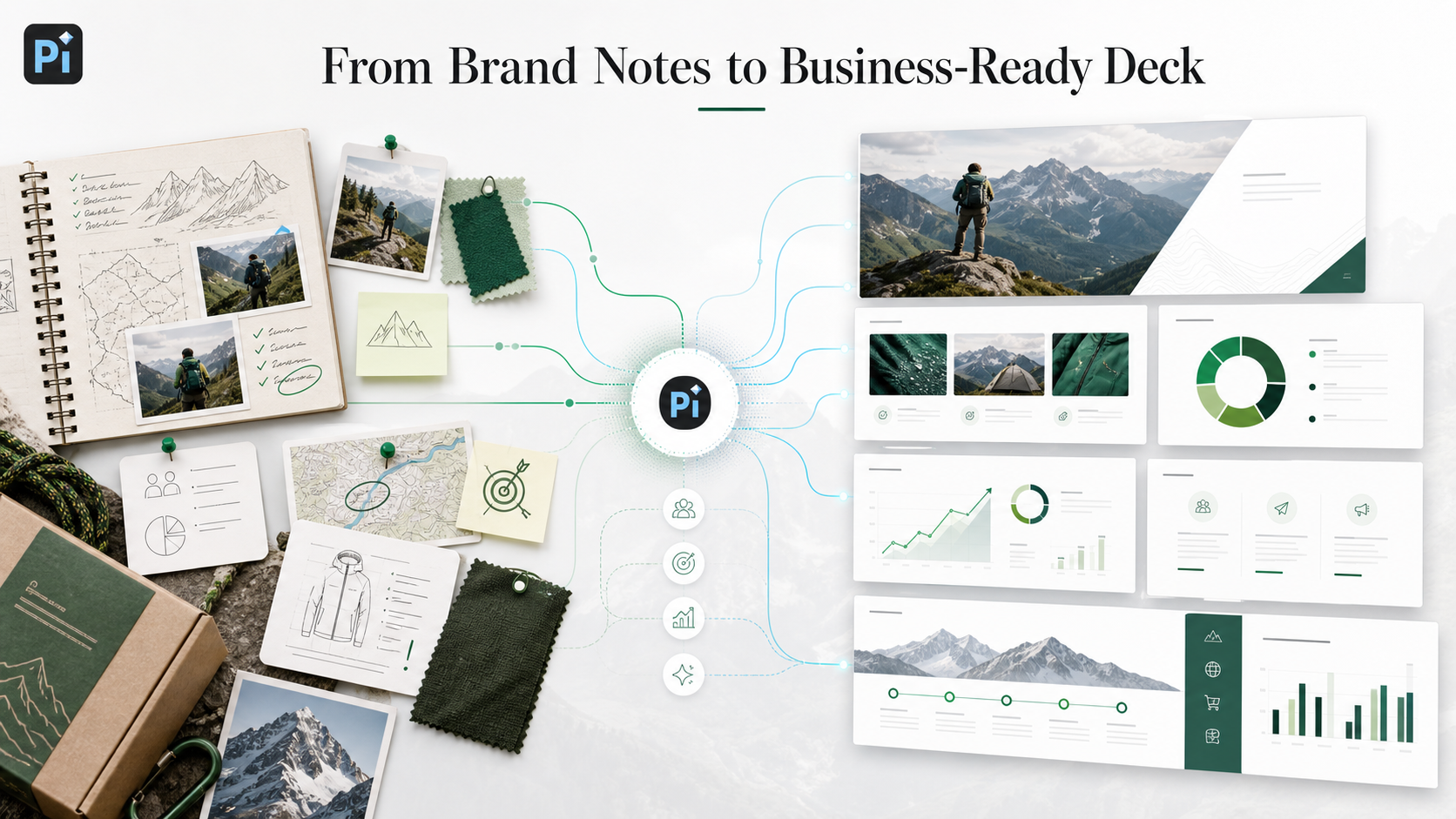
1. Business Logic Comes Before Slide Styling
Pi helps organize a brand proposal around a strategic argument. Instead of starting with decoration, the workflow focuses on how the story should unfold: problem, opportunity, audience, positioning, campaign idea, execution, and measurement.
That matters for premium brand presentations because visual inspiration can easily outrun logic. Pi helps teams shape the deck so each slide has a role in the decision journey. The result is a presentation that feels creative while still answering the questions executives, clients, and partners are likely to ask.
2. Premium Visual Quality Supports Brand Perception
A premium outdoor brand cannot afford a deck that feels generic. The presentation should reflect the same level of care expected from the product, campaign, or retail experience.
Pi supports premium visual quality by helping teams create slides with stronger structure, cleaner hierarchy, and a more business-grade aesthetic. For a high-end lifestyle or performance identity, this matters because the deck itself becomes evidence of brand discipline. The audience should feel that the strategy has been considered carefully, not assembled quickly from disconnected slides.
3. Multi-Agent AI Supports a Deeper Presentation Workflow
Pi’s Multi-Agent AI supports a more layered presentation workflow. Rather than treating the deck as a simple text-to-slide output, it can help refine structure, messaging, and presentation quality for professional use cases such as brand proposals, campaign pitches, executive marketing decks, and product launch presentations.
This does not replace brand strategy, market research, or creative direction. Human judgment remains essential. But Pi can help teams move faster from rough thinking to a business-ready deck, especially when the presentation needs both strategic clarity and premium visual standards.
Outdoor Brand Marketing Deck: Template vs. Pi Workflow
| Presentation Need | Static Marketing Presentation Template | Pi AI-Assisted Workflow |
|---|---|---|
| Structure | Predefined slide order | Adapts to the strategic argument |
| Brand Adaptation | Requires manual adjustment | Helps shape tone, hierarchy, and flow |
| Strategic Depth | Depends on user input | Supports clearer business logic |
| Visual Refinement | Layouts may feel generic | Emphasizes premium presentation quality |
| Pitch Readiness | Often needs heavy editing | Built for professional review and approval |
When This Presentation Approach Works Best
This approach is especially useful for agency teams preparing an outdoor brand marketing pitch, internal marketing leaders presenting a premium brand strategy slide sequence, founders shaping an investor-facing brand narrative, or consultants building a retail partnership proposal.
It also works well for product launch planning, seasonal campaign development, ambassador program proposals, content strategy decks, experiential marketing plans, and premium lifestyle campaign planning. In each case, the deck must do more than describe tactics. It must connect the brand world to a credible growth plan.
A template can provide the skeleton, but the thinking behind the deck determines whether the pitch is persuasive. The stronger the relationship between audience insight, positioning, creative platform, and channel strategy, the more confident the presentation will feel.
Final Verdict: Build a Deck That Feels Premium and Thinks Strategically
A premium outdoor brand marketing strategy presentation must combine emotional appeal with commercial clarity. It should make the audience feel the brand’s world, but it should also make the decision feel logical, measurable, and executable.
The best marketing presentation template is not just a set of attractive slides. It is a strategic narrative system that protects premium brand perception while guiding stakeholders toward approval. For teams that need to turn campaign ideas, brand notes, and strategic direction into a polished business presentation, Pi offers a workflow built around business logic, professional structure, Multi-Agent AI, and premium visual quality.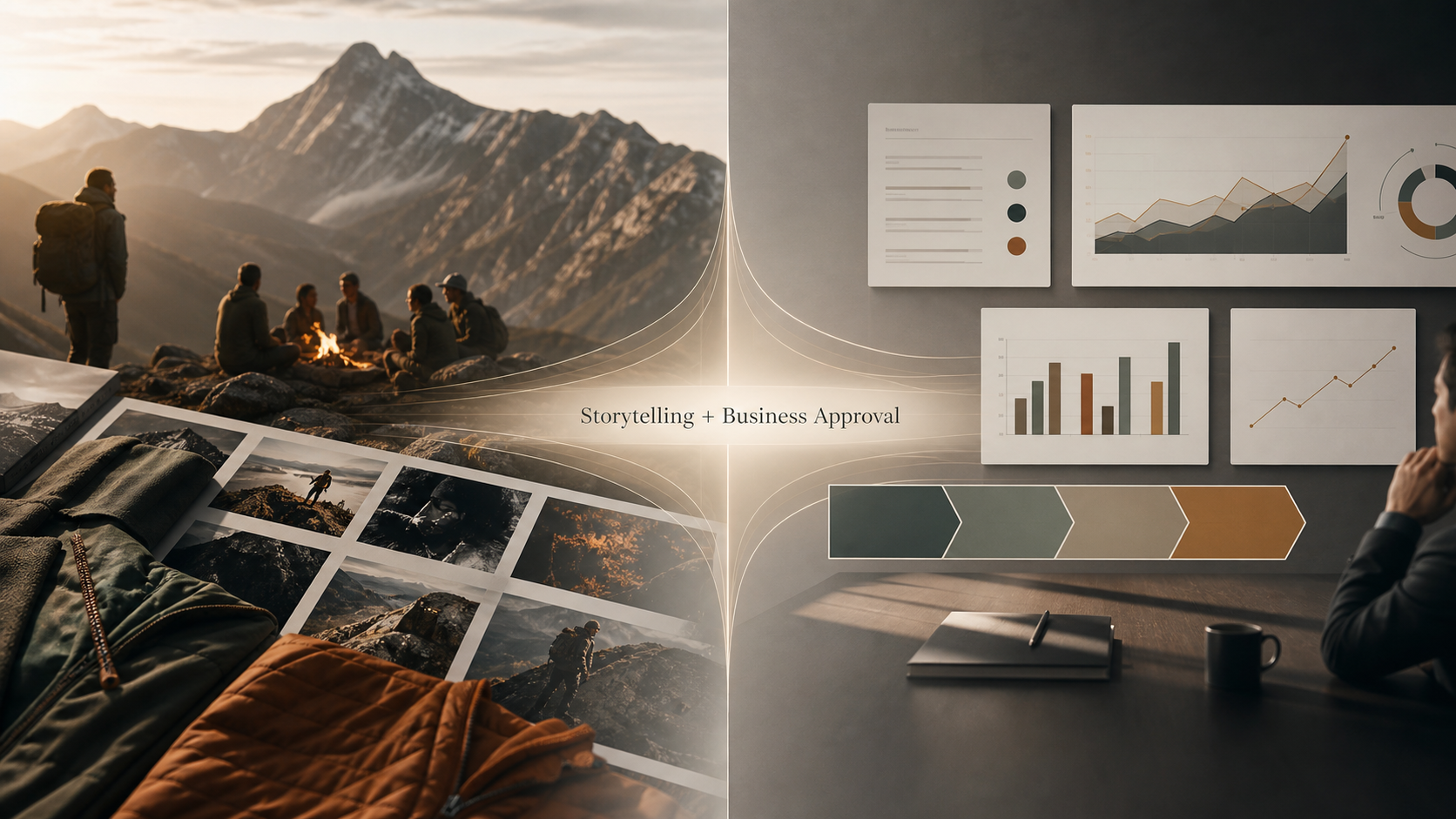
Frequently Asked Questions (FAQ)
Q: What should be included in an outdoor brand marketing pitch? A: Include the brand challenge, market landscape, target audience, positioning, message pillars, campaign concept, channel strategy, activation roadmap, KPIs, and next steps. The deck should connect emotional brand storytelling with a clear business case.
Q: How do you make a premium brand strategy slide feel high-end? A: Use restrained layouts, strong visual hierarchy, concise copy, controlled color, and specific language. Avoid generic outdoor clichés and focus on a clear strategic message supported by refined visuals.
Q: Can AI help create a brand proposal? A: Yes. AI can help organize notes, structure the narrative, refine messaging, and create a polished first draft. It should support, not replace, human strategy, creative direction, market research, and final decision-making.
Q: What makes Pi useful for marketing strategy presentations? A: Pi helps teams build business-ready presentations with coherent logic, professional structure, Multi-Agent AI support, and premium visual quality. It is especially useful when a brand proposal needs to feel both creative and executive-ready.
 Creative Agency Client Proposal Template: Winning B2B Deals with Aesthetics
 Management Consulting Report Template: Structuring Complex Business Logic