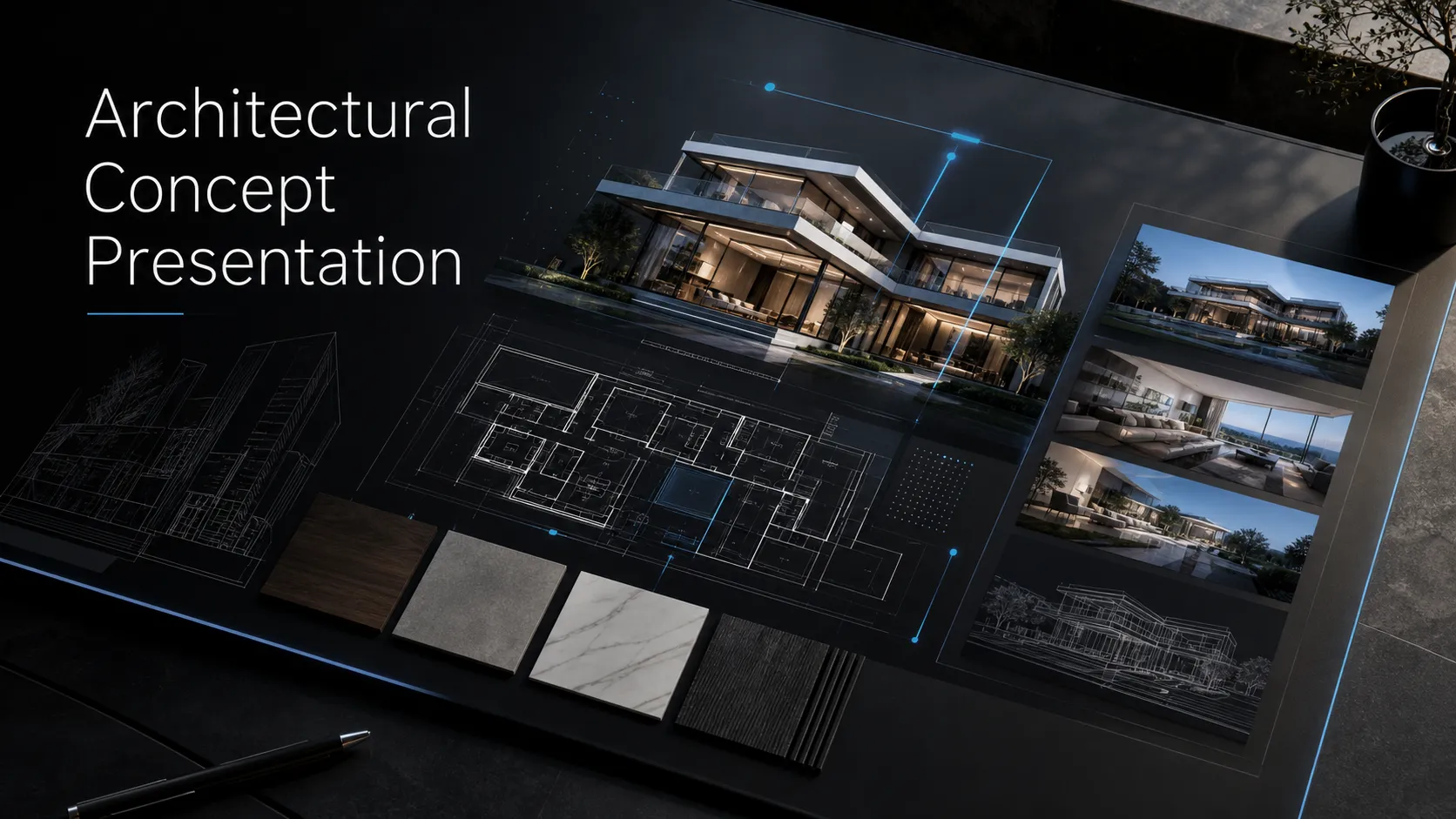
Architectural Concept Presentation: Conveying Space and Vision with AI
An architectural concept presentation has to sell something people cannot fully experience yet. Before the building exists, before the penthouse is staged, before the lobby has atmosphere, the deck must make an audience believe in space, value, and intent.
That is why a real estate pitch deck or architectural proposal cannot rely on attractive visuals alone. Renders, floor plans, mood boards, and location maps are important, but they need to be organized into a persuasive story. The audience needs to understand what the project is, who it serves, why the location matters, and how the design vision creates commercial or lifestyle value.
AI can help accelerate that process, especially when teams are working with scattered notes, early design references, sales positioning, and incomplete copy. The opportunity is not to replace architectural judgment. It is to turn spatial ideas into a clearer, more polished, business-ready presentation.
Why Architectural Concept Presentations Are Hard to Get Right
Architecture and real estate are highly visual fields, but presentations in these categories are rarely just visual. They must communicate scale, atmosphere, flow, future demand, investment logic, and emotional appeal. The audience may include developers, investors, buyers, brand partners, municipal stakeholders, or internal executives, each with different priorities.
The challenge is that many decks become visually rich but strategically unclear. A slide may show a beautiful exterior render without explaining the design idea. A floor plan may include accurate information but overwhelm the room. A lifestyle image may feel premium but fail to connect to the buyer profile.
In luxury property slides especially, the standard is higher. The deck must feel refined, restrained, and confident. If it feels like a collage of images, the project can appear less developed than it actually is.
What a Strong Real Estate Pitch Deck Needs to Communicate
A strong real estate pitch deck should help decision-makers believe in the project as both a place and a proposition. It needs to make the spatial vision understandable while also making the opportunity credible.
At a minimum, the presentation should clarify the project vision, the target audience, the location advantage, the design concept, and the intended lifestyle or usage scenario. It should also explain amenities, differentiation, market relevance, and commercial rationale. For a residential development, that may mean showing how the design supports privacy, wellness, convenience, and status. For a mixed-use project, it may mean showing how circulation, tenant mix, and public realm strategy create value.
The best decks make these points feel connected. The location leads naturally to the audience. The audience leads to the design response. The design response leads to the value proposition.
The Difference Between Beautiful Slides and a Persuasive Spatial Story
A polished visual design PPT can make an architectural concept look credible, but polish is not the same as persuasion. A persuasive spatial story guides the audience from context to concept to value. It gives every image a role and every slide a reason to exist.
Common weaknesses include:
- Disconnected renders that look impressive but do not build an argument
- Unclear positioning around the buyer, investor, or tenant profile
- Overloaded floor-plan slides that require too much interpretation
- Mood boards that feel aesthetic but not strategic
- Weak narrative flow between location, design, amenities, and ROI
The goal is not to reduce the beauty of the presentation. It is to make the beauty work harder. In high-stakes architecture and real estate communication, visual atmosphere should support a clear decision.
How AI Can Help Shape an Architectural Concept Presentation
AI is useful when the team has strong ideas but needs help turning them into a structured presentation. https://www.ibm.com/think/topics/ai-agents It can organize messy inputs, summarize design notes, suggest slide sequences, refine executive-level copy, and help define a visual design PPT direction that feels coherent.
For example, AI can help translate a long design memo into a concise concept narrative. It can separate audience-facing messages from technical details. It can suggest where to use location context, where to show spatial experience, and where to connect amenities to lifestyle or commercial value.
However, AI should not be treated as a substitute for architects, designers, render artists, real estate analysts, or legal and compliance review. Technical drawings, code requirements, certification materials, financial assumptions, and architectural accuracy still require expert validation. The strongest workflow combines AI-assisted structure with human expertise and final approval.
Where Pi Fits in the Workflow
Pi, short for Presentation Intelligence, is an AI presentation maker built for professional business presentations. For architectural and real estate teams, Pi is most useful when the challenge is not simply “make slides,” but “turn a complex project into a persuasive, premium deck.”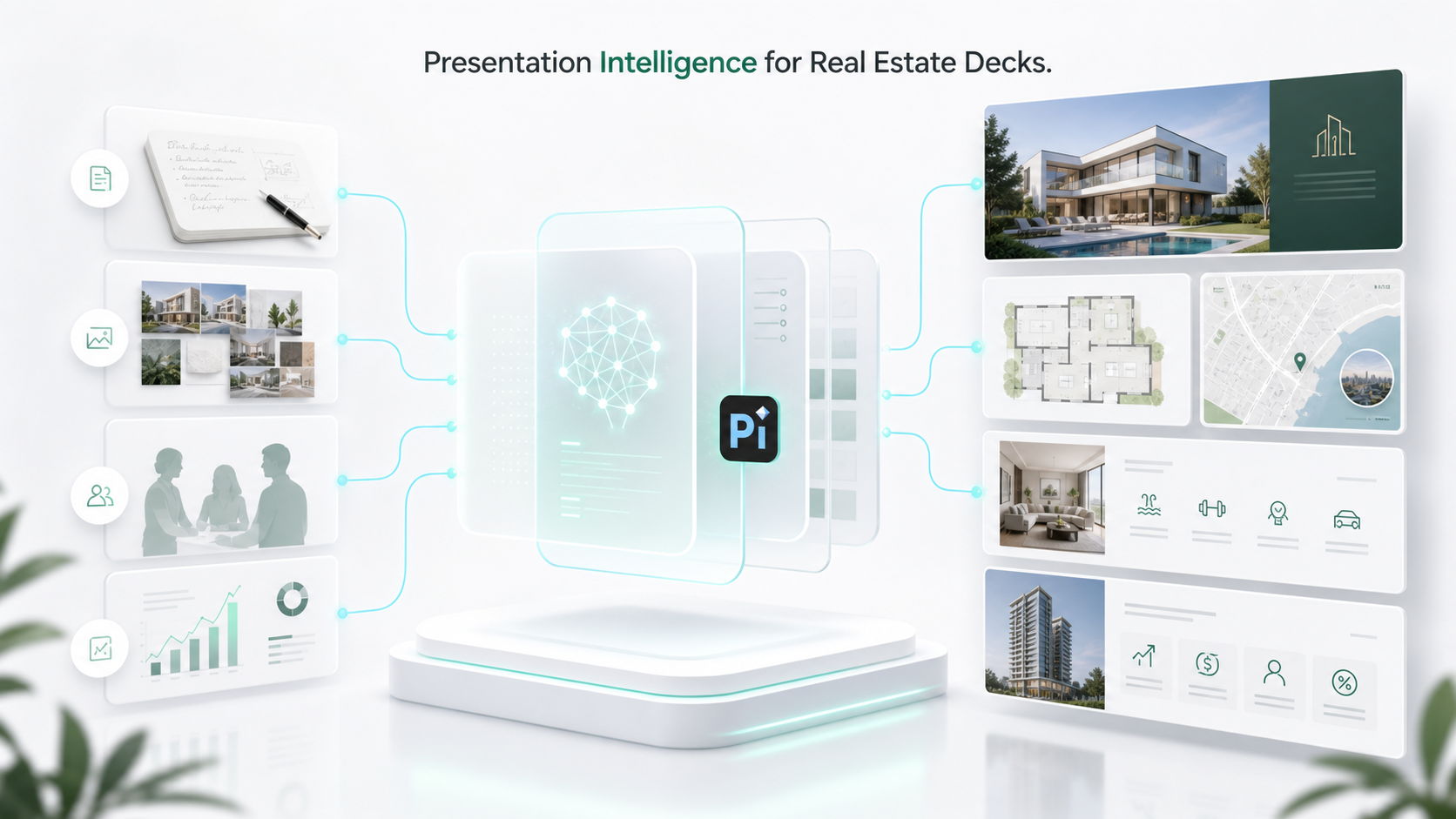
Pi helps transform project notes, design direction, audience goals, property positioning, and visual references into a business-ready presentation. Its Multi-Agent AI approach supports structured thinking, narrative development, and premium visual quality, making it suitable for real estate pitch decks, luxury property slides, investor previews, and client-facing architectural proposals.
1. Turning Spatial Ideas into a Clear Narrative
An architectural concept presentation needs a sequence that feels natural. Pi can help organize the story around site context, project vision, audience need, design response, and value proposition.
Instead of treating each slide as a separate visual asset, Pi helps shape the deck as a connected argument. This is especially useful when the source material includes floor plans, mood directions, selling points, brand language, and stakeholder comments that have not yet been synthesized.
2. Making Luxury Property Slides Feel Premium and Controlled
Premium presentation quality depends on restraint. Luxury property slides often work best when hierarchy, https://www.nngroup.com/articles/visual-hierarchy-ux-definition/ spacing, typography, image balance, and color systems are carefully controlled. Too many decorative elements can reduce the sense of sophistication.
Pi supports a more business-grade aesthetic by helping slides feel consistent and intentional. The result should not look like a generic template. It should feel aligned with the project’s positioning, whether the tone is minimal, resort-like, urban, heritage-inspired, or contemporary.
3. Supporting Business Logic Behind the Design Vision
Real estate and architecture presentations need to persuade people who may not be evaluating design alone. Developers, investors, sales leaders, and partners want to understand why the concept is relevant, differentiated, and commercially viable.
Pi helps connect design features to business relevance. A wellness garden becomes more than a landscape feature; it becomes part of the lifestyle proposition. A flexible floor plate becomes more than a plan; it becomes a response to market demand. This connection between design and value is what makes the deck more persuasive.
Architectural Concept Presentation Structure: A Practical Slide Flow
A practical architectural concept presentation often begins with a strong opening vision: one or two slides that define the project’s core idea and emotional promise. From there, the deck should establish market or location context, showing why the site is meaningful and what opportunity it creates.
Next, introduce the target audience. This may include buyer profiles, tenant expectations, investor priorities, or community needs. Once the audience is clear, present the design concept as a response to those needs. This is where the deck can explain form, materiality, spatial planning, landscape, interior mood, and experience.
The middle of the deck should guide viewers through the project as if they are moving through it: arrival, entrance, circulation, key spaces, amenities, views, and daily usage scenarios. For a luxury property, this section should balance atmosphere with clarity. For an investor deck, it should also connect features to demand, differentiation, and value.
The final section should cover sales or investment rationale, next steps, and the specific decision being requested. A strong deck does not simply end with a beautiful render. It ends by making the next action feel logical.
Architectural Presentation Needs | Manual Deck Building | Pi
| Presentation Need | Manual Deck Building | Pi |
|---|---|---|
| Structure | Built slide by slide | Storyline shaped from inputs |
| Narrative clarity | Depends on writer and reviewer time | Supported by Multi-Agent AI reasoning |
| Visual consistency | Requires manual layout control | Guided by premium design direction |
| Speed | Slower with many revisions | Faster first draft and refinement |
| Business-readiness | Often added late | Integrated into the deck logic |
Best Fit: When to Use AI for Real Estate and Architecture Decks
AI is most useful when the team needs to move from scattered material to a polished first version quickly. It works well for early concept pitches, developer presentations, luxury property sales decks, investor previews, marketing proposals, and internal alignment decks.
It is also useful when different stakeholders need the same project framed in different ways. A buyer-facing version may emphasize lifestyle and atmosphere. An investor-facing version may emphasize positioning, demand, and returns. An internal version may focus on decisions, risks, and next steps.
AI is less appropriate as a substitute for technical drawings, compliance documentation, architectural certification, legal claims, or final financial modeling. Those materials require specialist review. The right use of AI is to strengthen communication, not to replace professional responsibility.
A Better Way to Present Space, Story, and Value
The strongest architectural concept presentations combine design atmosphere with strategic clarity. They help the audience feel the space, understand the concept, and believe in the value behind the vision.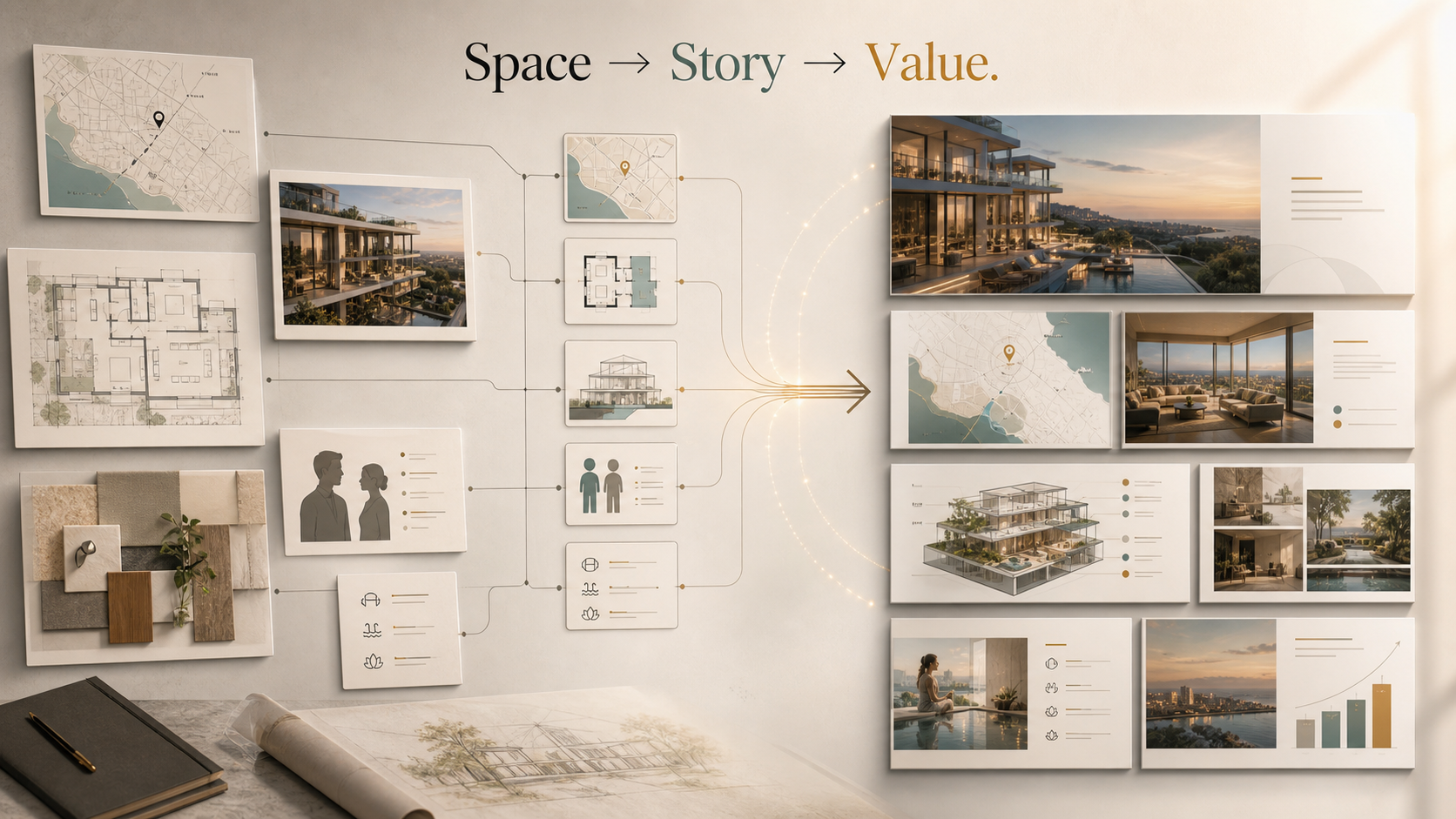
For teams building a real estate pitch deck, luxury property slides, or a client-facing architectural concept presentation, Pi offers a workflow for turning complex inputs into a structured, premium, business-ready deck. It helps make the presentation more than a collection of visuals. It helps the project tell a coherent story.
Frequently Asked Questions (FAQ)
Q: What should be included in an architectural concept presentation? A: It should include the project vision, site or market context, target audience, design concept, spatial experience, amenities, visual direction, differentiation, commercial rationale, and next steps.
Q: How is a real estate pitch deck different from a normal property brochure? A: A brochure usually presents finished marketing information, while a real estate pitch deck is designed to persuade a specific audience. It explains the opportunity, the strategy, the design logic, and the value proposition behind the project.
Q: Can AI create luxury property slides? A: AI can help structure, write, and visually direct luxury property slides, especially in early drafting and refinement. Human expertise is still needed for architectural accuracy, brand judgment, render quality, and final approval.
Q: Is Pi suitable for architectural and real estate presentations? A: Yes. Pi is suitable when teams need a professional architectural concept presentation, real estate pitch deck, investor preview, or premium property sales deck that combines spatial storytelling with business logic.
 Corporate Employee Onboarding Presentation: Engaging Internal Training Templates