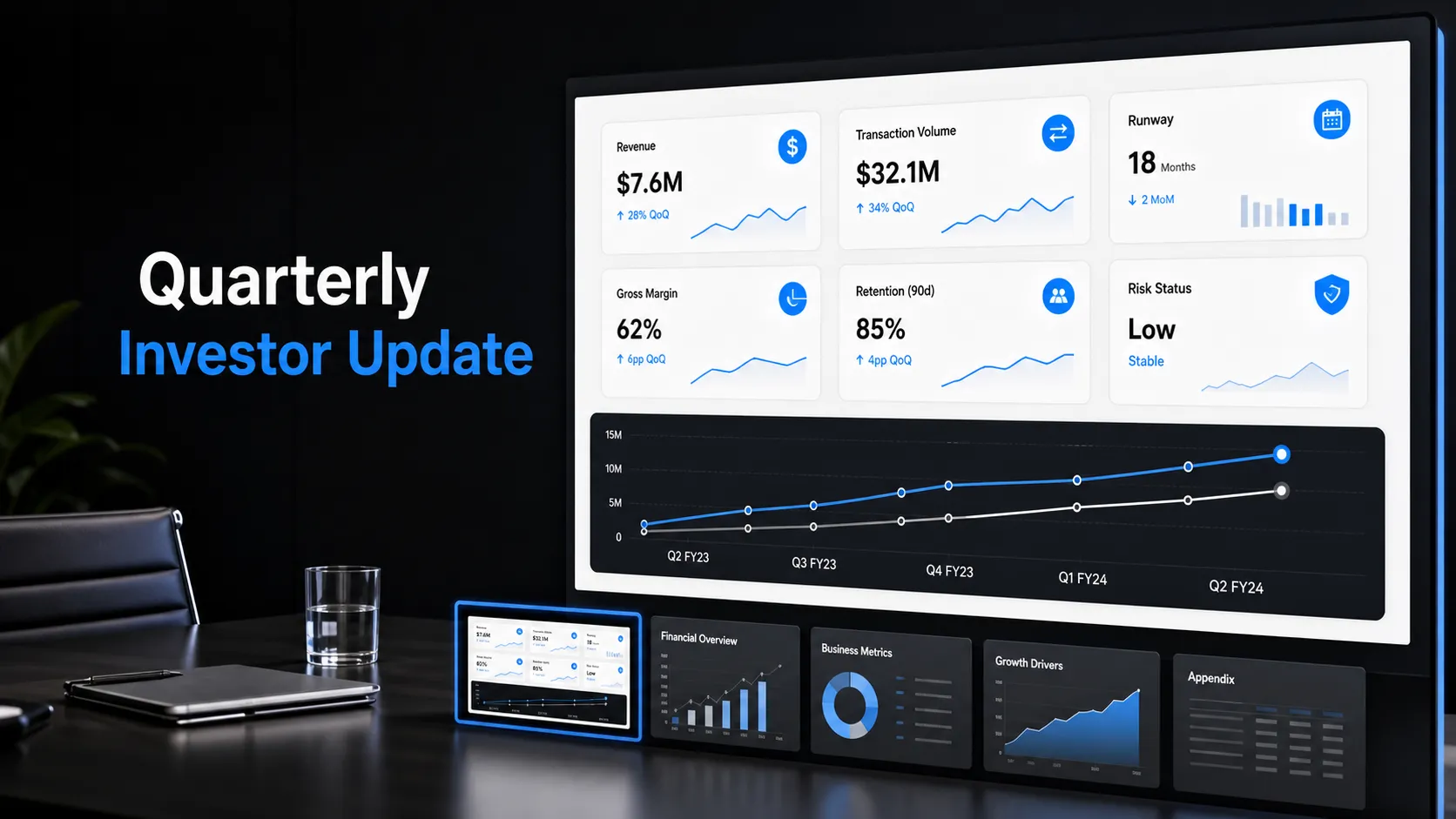
Quarterly Investor Update Template for Fintech Startups
A strong fintech investor update does more than report what happened last quarter. It helps investors understand whether the business is becoming more valuable, more resilient, and more disciplined over time.
For fintech startups, that is not easy. The numbers are often dense. Revenue may depend on transaction volume, interchange, lending margins, subscription fees, assets under management, or usage-based pricing. Growth can look impressive on the surface while risk, retention, compliance, or capital efficiency tell a more complicated story.
That is why a quarterly investor update template should not be treated as a simple PPT design asset. It should be a structured communication system: clear enough for busy stakeholders, detailed enough for serious investors, and honest enough to build long-term trust.
Why Fintech Investor Updates Are Harder Than Generic Startup Updates
A generic startup update can often focus on revenue, users, product launches, and hiring. A fintech investor update usually needs to go deeper because the business model is tied to money movement, regulation, trust, and risk.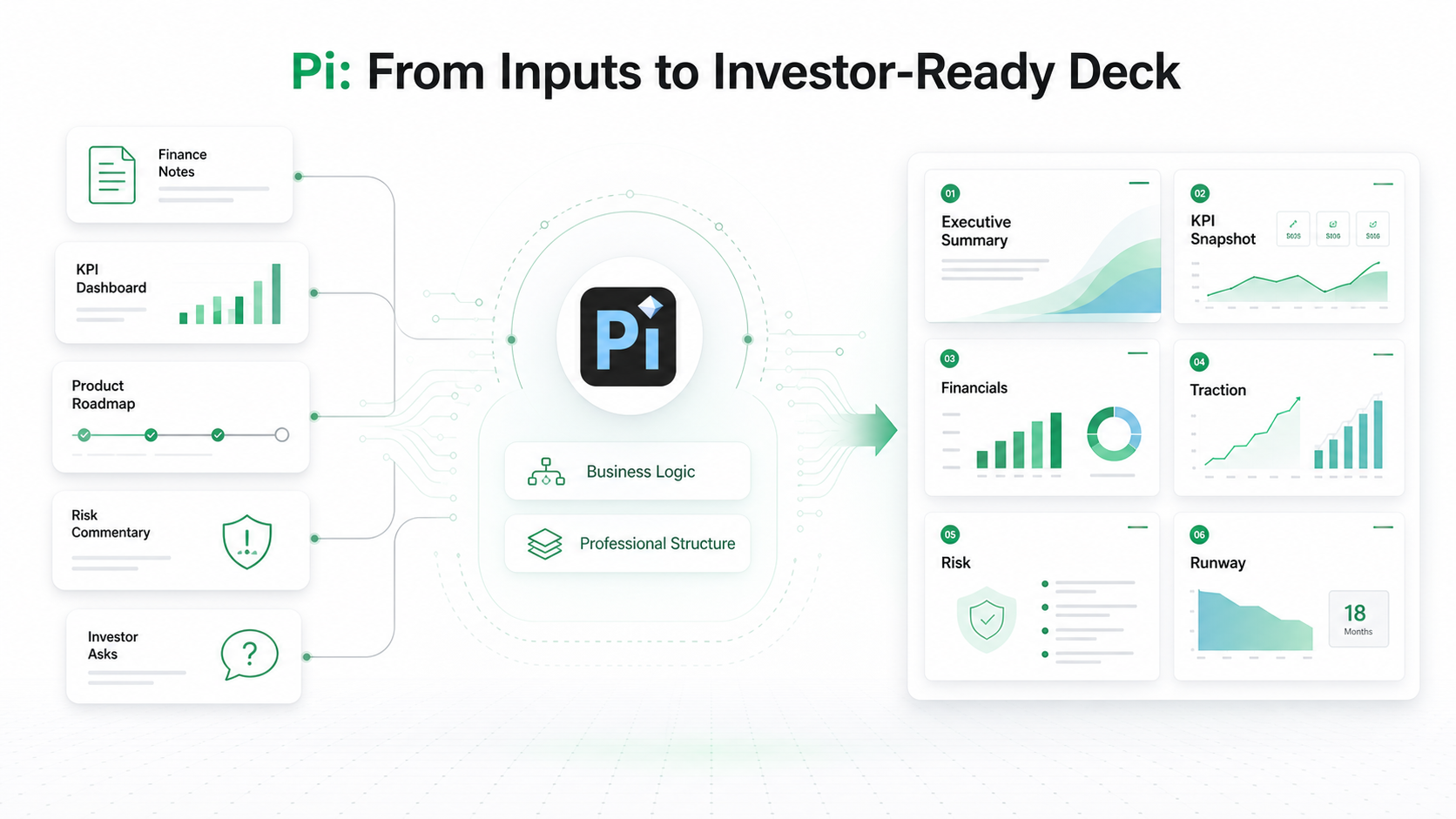
Fintech teams may need to explain:
- Transaction volume, take rate, active accounts, default rates, fraud trends, or payment success rates
- Revenue quality across different products, customer segments, or geographies
- Compliance progress, licensing milestones, audits, or operational controls
- Unit economics, cash burn, runway, and capital allocation
- Risk exposure in credit, liquidity, fraud, partner dependency, or regulation
The challenge is not only that there are more metrics. The challenge is that those metrics are connected. A spike in transaction volume may be positive, but investors will want to know whether it came with better margins, higher retention, acceptable fraud levels, and sustainable acquisition costs.
What Investors Want to See in a Quarterly Update
Investors are not reading a quarterly update only to see whether revenue went up. They are trying to understand the quality of progress against the plan. A good startup traction presentation shows what changed, why it changed, and what management is doing next.
For fintech startups, investors typically look for five signals. First, they want evidence of traction that is durable, not just a one-time volume increase. Second, they want financial discipline, especially when growth depends on incentives, subsidies, or heavy operational support. Third, they want risk awareness because fintech businesses can scale problems as quickly as they scale revenue. Fourth, they want clarity on runway and capital needs. Finally, they want specific asks, such as introductions, hiring support, regulatory guidance, or follow-on financing conversations.
The best updates are concise but not vague. They do not hide problems, but they also do not bury the audience in raw exports. They help investors see the operating story behind the quarter.
Recommended Quarterly Investor Update Structure
A practical quarterly investor update template should begin with an executive summary. This first section should answer the question investors care about most: is the company on track, ahead of plan, or facing a material change? Keep it direct, using a few key statements about performance, priorities, and risks.
Next, include a KPI snapshot. For fintech startups, this may cover revenue, gross margin, transaction volume, active users, customer acquisition cost, payback period, retention, loss rates, payment success rates, or platform reliability. The right KPIs depend on your model, but the definitions should remain consistent from quarter to quarter.
Financial data slides should follow, including revenue, cost structure, burn, cash balance, runway, and forecast variance. These slides should not be overloaded with spreadsheet detail. They should highlight what changed and why.
A traction section should show customer, merchant, account, transaction, or asset growth. If the company serves multiple segments, separate enterprise, SMB, consumer, or partner performance where relevant. Then add product roadmap progress, market updates, key risks, runway outlook, and specific investor asks.
The result should feel like a quarterly business review, not a fundraising teaser. It should be factual, structured, and useful for stakeholders who already know the company but need a clear view of progress.
How to Turn Financial Data Slides into a Clear Narrative
Financial data slides are often where investor updates become difficult to read. Founders and finance leads may include too many charts because they want to be transparent. Transparency matters, but numbers without interpretation can create confusion. https://hbr.org/2013/04/how-to-tell-a-story-with-data
Each financial slide should answer a strategic question. Revenue slides should explain whether monetization is improving. Margin slides should show whether growth is becoming more efficient. Retention slides should indicate whether customers continue to trust and use the product. Burn and runway slides should show whether capital is being allocated responsibly. Risk slides should explain whether the team is identifying and managing issues early.
A useful approach is to pair each metric with one sentence of interpretation. For example, do not only show that transaction volume increased 28% quarter over quarter. Explain whether that growth came from new customers, higher usage from existing customers, a seasonal effect, or a major partner launch. This turns data into decision-ready context.
A Simple Table for What to Include and What to Avoid
| Update Section | Include | Avoid |
|---|---|---|
| Executive summary | Quarter status, key changes, priority focus | Long founder commentary |
| KPI snapshot | Consistent metrics and definitions | Changing metrics without explanation |
| Financial data slides | Revenue, burn, runway, forecast variance | Raw spreadsheet screenshots |
| Traction | Customer, transaction, retention, or usage quality | Vanity metrics without context |
| Risk update | Compliance, fraud, credit, partner, or market risks | Hiding negative signals |
| Investor asks | Specific introductions, advice, or support needed | Generic “help us grow” requests |
How Pi Helps Build a Business-Ready Fintech Investor Update
Pi is an AI presentation maker built for professional business decks, including investor updates, executive presentations, consulting reports, pitch decks, and sales decks. For fintech teams, the value is not simply generating attractive slides faster. The value is helping turn scattered quarterly inputs into a structured, business-ready presentation.
A quarterly business review AI workflow is especially useful when the team has data in different places: finance notes, product updates, KPI dashboards, board feedback, risk commentary, and founder observations. Pi helps organize those inputs into a coherent deck with business logic, clear hierarchy, and premium visual quality.
1. Business Logic Comes Before Slide Styling
In investor communication, slide design should support the argument, not replace it. Pi’s Multi-Agent AI approach helps teams move from a loose set of notes and metrics toward a more structured executive narrative.
That means the deck can start with the investor’s core questions: What changed this quarter? Which metrics matter most? Where is the business ahead or behind plan? What needs attention next? This helps avoid the common problem of disconnected metric slides that look polished but fail to explain the business.
2. Data-Heavy Updates Become Easier to Read
Fintech updates often contain more data than the audience can absorb in one pass. Pi helps organize dense information into stakeholder-friendly slides with clearer sections, cleaner visual hierarchy https://www.nngroup.com/articles/visual-hierarchy-ux-definition/ , and more focused page-level messages.
For example, instead of placing revenue, transaction volume, user growth, and burn on one crowded slide, the presentation can separate performance by theme. Growth, monetization, efficiency, and risk can each have their own role in the story. The result is easier for investors to scan and easier for founders to present.
3. Premium Visual Quality Supports Investor Confidence
Professional design does not guarantee investor approval, and it cannot fix weak financial performance. However, clean visual quality helps investors process information faster and reduces unnecessary friction.
Pi’s business-grade aesthetics help fintech teams present complex quarterly updates with more control and credibility. Clear charts, consistent layouts, strong typography, and disciplined spacing all support the same goal: making the business story easier to understand. For high-stakes stakeholder communication, that clarity matters.
Investor Update Checklist Before Sending
Before sending a quarterly investor update, review the deck carefully from both a finance and communication perspective. Verify that every number is accurate and that metric definitions match previous updates. If a definition has changed, explain the reason clearly.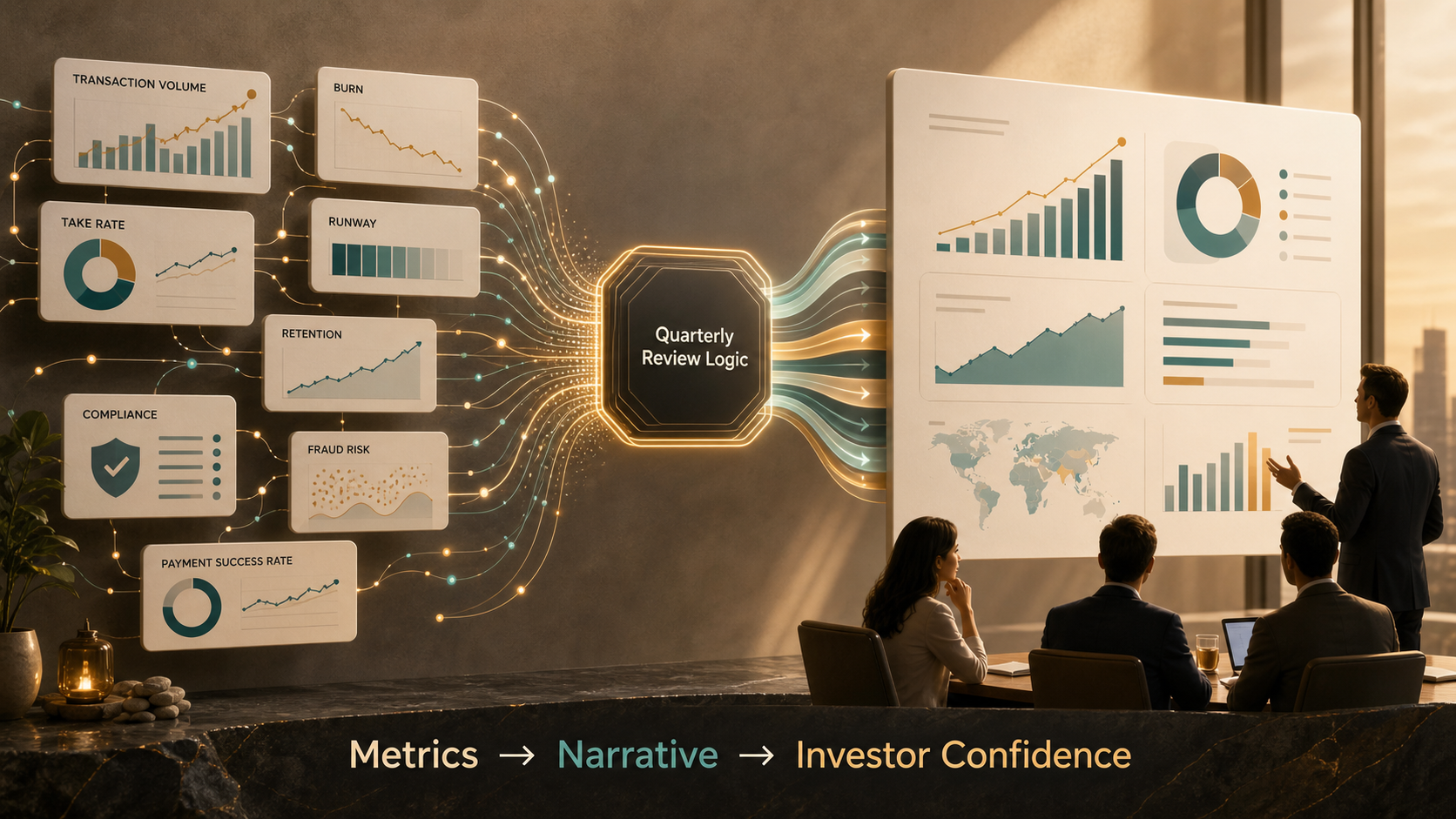
Separate facts from forecasts. Historical performance, current pipeline, management expectations, and strategic assumptions should not be blurred together. Investors can handle uncertainty, but they need to know what is confirmed and what is projected.
Review the risk section with discipline. A fintech investor update should acknowledge material issues such as fraud exposure, regulatory delays, credit performance, partner concentration, payment reliability, or changing customer behavior. Honest risk communication often builds more trust than overly polished optimism.
Finally, make the investor asks specific. If you need introductions to banking partners, candidates, enterprise buyers, regulators, debt providers, or follow-on investors, say so directly. A clear ask turns the update from a passive report into an active stakeholder tool.
Frequently Asked Questions (FAQ)
Q: What should a fintech investor update include? A: A fintech investor update should include an executive summary, KPI snapshot, financial data slides, traction metrics, product progress, market context, key risks, runway, and specific investor asks. The exact metrics should match the company’s business model.
Q: How is a fintech startup traction presentation different from a standard startup update? A: A fintech startup traction presentation usually needs more detail on transaction quality, monetization, compliance, risk, retention, and capital efficiency. Growth alone is not enough; investors also want to understand the quality and sustainability of that growth.
Q: Can quarterly business review AI help create investor updates? A: Yes. A quarterly business review AI workflow can help organize scattered notes, metrics, and charts into a clearer presentation structure. However, teams should still verify all financial data, metric definitions, and strategic assumptions before sending the deck.
Q: How often should fintech startups send investor updates? A: Many fintech startups send detailed investor updates quarterly, with shorter monthly notes if the company is growing quickly, fundraising, or navigating material risks. The most important factor is consistency, so investors can track progress over time.
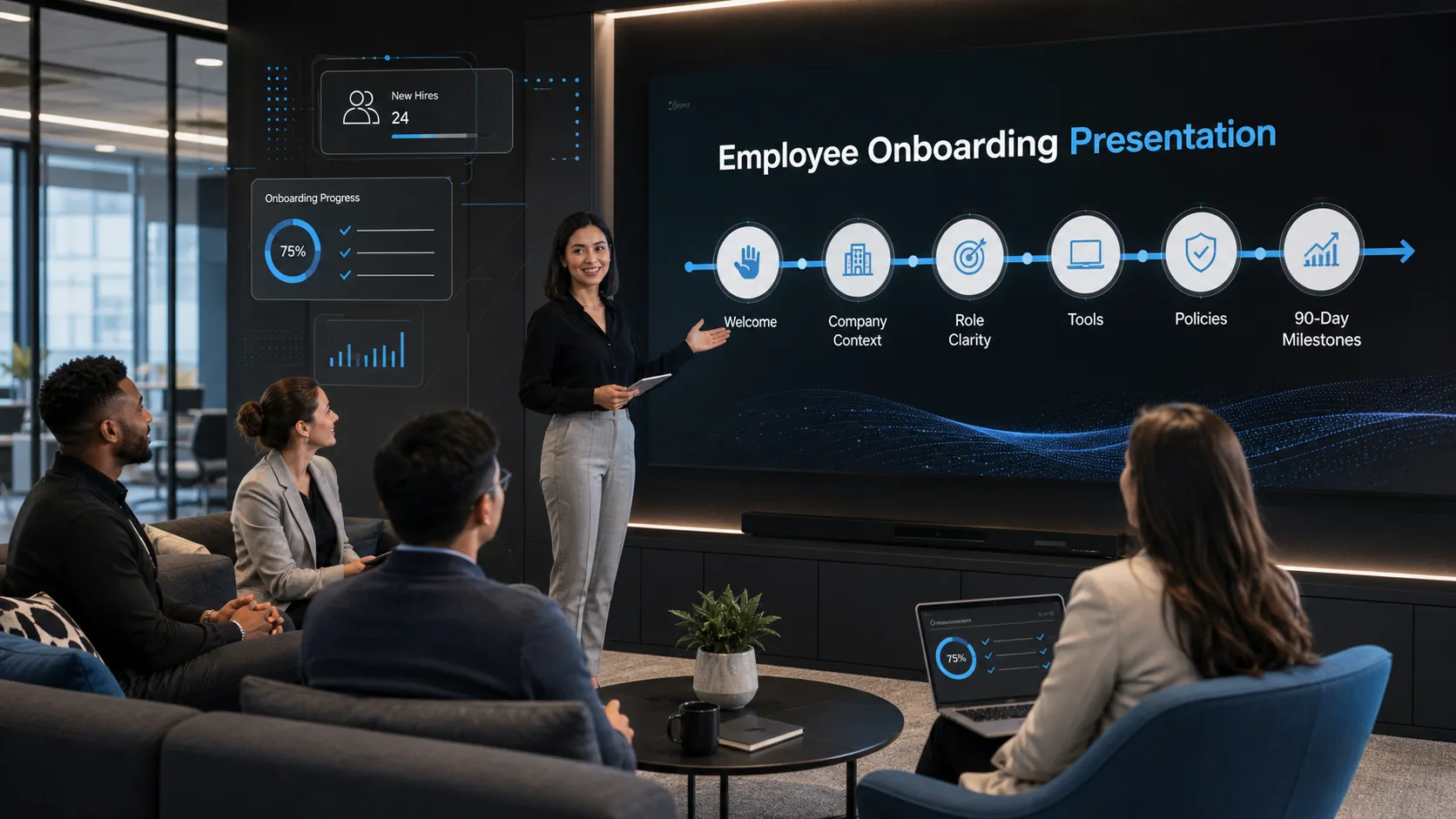 Corporate Employee Onboarding Presentation: Engaging Internal Training Templates