Cross-Cultural Business Pitches: How to Communicate Globally with Confidence
A strong business pitch can lose impact when it crosses borders. The problem is rarely the idea alone. More often, the challenge is that the audience brings different expectations about communication style, decision-making, risk, authority, timing, and trust.
That is why a cross-cultural business pitch cannot simply be a translated version of a domestic pitch. It needs the same strategic foundation, but with clearer structure, more audience awareness, and stronger presentation discipline. Whether you are pitching international clients, global investors, regional partners, or internal stakeholders across markets, confidence comes from preparation—not from assuming that one message will work everywhere.
Why Cross-Cultural Business Pitches Are Different
In a local pitch, you may share many assumptions with the audience: what sounds persuasive, how much detail is expected, when to discuss price, and how quickly people make decisions. In a global business pitch, those assumptions may not hold.
Some audiences expect direct recommendations early. Others prefer more context before a proposal. Some teams focus on relationship-building before commercial details. Others want evidence, implementation plans, and risk controls immediately. None of these preferences should be reduced to stereotypes, but they do remind us that international presentation skills require flexibility.
The key boundaries are practical:
- Your message must be clear enough to survive translation.
- Your proof points must feel relevant to the audience’s market.
- Your tone must build trust without sounding overly casual or overly rigid.
- Your slides must support understanding even when language comfort varies.
- Your Q&A must account for different decision roles and concerns.
Cross-cultural communication is not about changing your core offer. It is about making that offer easier to understand, evaluate, and trust.
Start by Understanding the Audience Behind the Market
A market is not an audience. Before building a multi-language pitch, research the actual people in the room: their roles, priorities, business pressures, and level of familiarity with your category.
Ask what the audience needs to believe before they can say yes. A CFO may need confidence in ROI and risk control. A regional partner may care about operational fit. A product leader may want technical credibility. A senior executive may need a concise strategic case before reviewing details.
Also consider meeting format. Will the pitch happen live, asynchronously, through an interpreter, or with a bilingual team? Will decision-makers review the deck after the meeting? These details shape how much context your slides need to carry on their own.
Good audience research avoids stereotypes. It does not assume that every person from a country communicates the same way. Instead, it looks at the company, industry, region, role, and business moment together.
Adapt the Message, Not Just the Language
Translation changes words. Localization improves meaning. For a global business pitch, localization may affect examples, metrics, customer references, industry comparisons, and even the order of the argument.
A domestic customer logo may not carry the same weight in another market. A pricing example may need local currency or purchasing context. A market-size claim may need regional evidence. A casual metaphor may not translate well. A joke, idiom, or sports reference may distract instead of helping.
The core business argument should remain consistent: problem, solution, value, evidence, and next step. But the supporting material should be adapted so the audience can see themselves in the pitch. That is the difference between a translated deck and an internationally persuasive deck.
Make Your Pitch Structure Easy to Follow Across Languages
Clear structure is one of the most important international presentation skills. When audiences are listening in a second language, reviewing translated slides, or hearing an interpreter, complicated sequencing creates unnecessary friction.
A reliable global pitch flow is simple: define the problem, explain the market context, introduce the solution, prove credibility, show the business model, describe implementation, and end with a specific next step. Each section should answer one question before moving to the next.
Use concise slide headlines that state the point, not vague labels. “Regional demand is growing faster than current supplier capacity” is more useful than “Market Overview.” Reduce jargon, define technical terms, and avoid acronyms unless they are standard for the audience.
| Presentation Need | Local Pitch Focus | Global Pitch Requirement |
|---|---|---|
| Audience context | Shared assumptions | Explicit framing |
| Language | Native fluency | Translation-ready clarity |
| Evidence | Familiar proof points | Market-relevant validation |
| Design | Visual appeal | Comprehension and hierarchy |
| Delivery | Presenter-led flow | Slides that support review |
The goal is not to make the pitch simplistic. The goal is to make complex ideas easier to evaluate.
Use Visuals to Reduce Misunderstanding
Strong presentation design helps cross-cultural communication because visuals can clarify relationships that words may complicate. A clean chart, structured comparison, or simple process diagram can reduce ambiguity across languages.
However, visuals only help when they are disciplined. Avoid overloaded slides with multiple messages competing for attention. Use consistent terminology across the deck, especially for product names, market categories, and financial metrics. Keep layouts readable for people reviewing on different devices or in meeting rooms with varying screen quality.
Visual hierarchy matters. https://www.nngroup.com/articles/visual-hierarchy-ux-definition/ The audience should know where to look first, what the main takeaway is, and which details support it. In global business settings, slide clarity is not decoration. It is part of trust-building.
Prepare for Multi-Language Pitch Delivery
A multi-language pitch requires more than sending your slides through translation software. AI translation https://www.ibm.com/think/topics/machine-translation can help create faster drafts of key messages, speaker notes, and localized slide text, but human review is important for nuance, tone, terminology, and industry accuracy.
Before delivery, identify the phrases that must be translated precisely: product positioning, pricing terms, legal concepts, technical claims, and customer outcomes. Prepare a short glossary so your team uses the same language across slides, handouts, and follow-up emails.
During the presentation, speak in shorter sentences and pause at key transitions. Avoid idioms such as “move the needle,” “ballpark figure,” or “silver bullet” unless you are certain they will be understood. If an interpreter is involved, give them the deck in advance and leave enough space between ideas.
Rehearse not only what you will say, but how you will move between languages, speakers, and sections. Smooth transitions signal control.
How Pi Helps Teams Build Global Business Presentations
Pi, short for Presentation Intelligence, is an AI presentation maker for professional teams building high-stakes decks such as pitch decks, sales decks, executive presentations, consulting reports, and market expansion proposals. For global presentations, Pi is useful because it supports the work behind the slides: organizing the logic, improving structure, and helping teams create polished materials that can be adapted across languages.
1. Business Logic Comes Before Slide Styling
A global pitch needs a clear argument before it needs visual polish. Pi helps teams move from scattered notes, research, and rough ideas into a more coherent presentation structure. This matters when multiple stakeholders are contributing from different regions and the deck must still tell one unified story.
2. Multi-Agent AI Supports Deeper Deck Development
Pi’s Multi-Agent AI is designed to support professional presentation workflows, not just generate a quick text-to-slide draft. For cross-border teams, that can help with refining the narrative, organizing evidence, improving slide flow, and shaping a deck that feels more business-ready before design polish begins.
3. Premium Visual Quality Builds Credibility
International audiences often judge preparation through the quality of the deck. Pi helps teams create presentations with premium, business-grade aesthetics, consistent hierarchy, and clearer layouts. That visual consistency can make a global business pitch feel more credible and easier to review after the meeting.
4. Multilingual Team Support Improves Collaboration
When teams need multilingual versions, Pi can support a more efficient workflow for adapting key messages and preparing presentation materials for different audiences. It should not replace human judgment, cultural review, or local market expertise, but it can reduce the friction of producing polished international decks.
Cross-Cultural Pitch Checklist
Before presenting to an international audience, review the pitch from the audience’s perspective. Have you researched the actual decision-makers, not just the market? Is the value proposition localized enough to feel relevant? Does the deck follow a clear problem-to-solution structure?
Check whether your key terms are translated consistently and whether technical language is explained. Review examples, customer references, pricing, market data, and implementation assumptions for local relevance. Confirm that the tone is respectful, confident, and appropriate for the business setting.
Finally, prepare Q&A. International stakeholders may ask about regulatory issues, local support, delivery timelines, partnership models, data security, or regional competition. A confident answer is often less about having every detail memorized and more about showing that you understand the concerns behind the question.
A More Confident Way to Pitch Across Borders
A successful cross-cultural business pitch is built on respect, clarity, and preparation. The best presenters do not rely on charisma alone. They make the message easier to follow, adapt evidence to the audience, reduce language friction, and design slides that support global decision-making.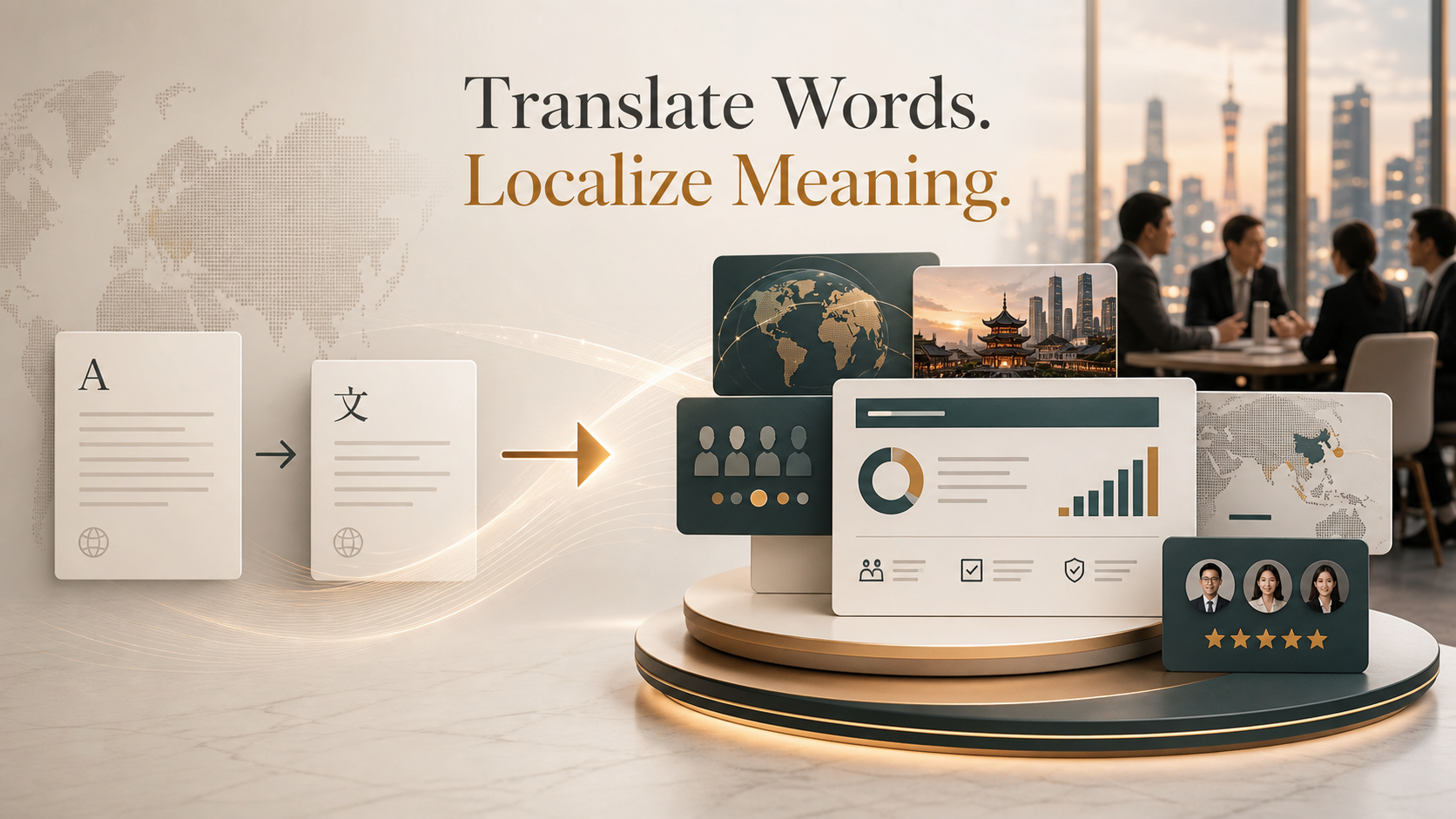
For teams preparing international pitch decks, Pi can help create a more polished and business-ready presentation workflow. It supports the structure, logic, and visual quality required when a deck must work across languages, markets, and stakeholders—without turning the process into a generic translation exercise.
Frequently Asked Questions (FAQ)
Q: What is cross-cultural communication in a business pitch? A: Cross-cultural communication in a business pitch means adapting how you explain value, evidence, tone, and next steps so an international audience can understand and trust your message. It involves more than translation; it requires awareness of audience expectations, decision roles, and business context.
Q: How do I prepare a global business pitch for international clients? A: Start by researching the audience, company, market, and meeting format. Then localize your examples, simplify your structure, define key terms, prepare translated messages where needed, and rehearse delivery. Your pitch should be easy to follow both live and as a standalone deck.
Q: What should I avoid in a multi-language pitch? A: Avoid idioms, slang, overloaded slides, unclear acronyms, and examples that only make sense in your home market. Do not rely entirely on AI translation without human review, especially for legal, technical, financial, or brand-sensitive language.
Q: Can AI tools improve international presentation skills? A: AI tools can help by organizing ideas, drafting slides, translating key messages, and improving presentation structure. However, international presentation skills still require human judgment, cultural awareness, and market-specific review. Pi supports the deck-building workflow while teams maintain strategic and cultural control.


 Cross-Cultural Business Pitches: How to Communicate Globally with Confidence